
Loading...
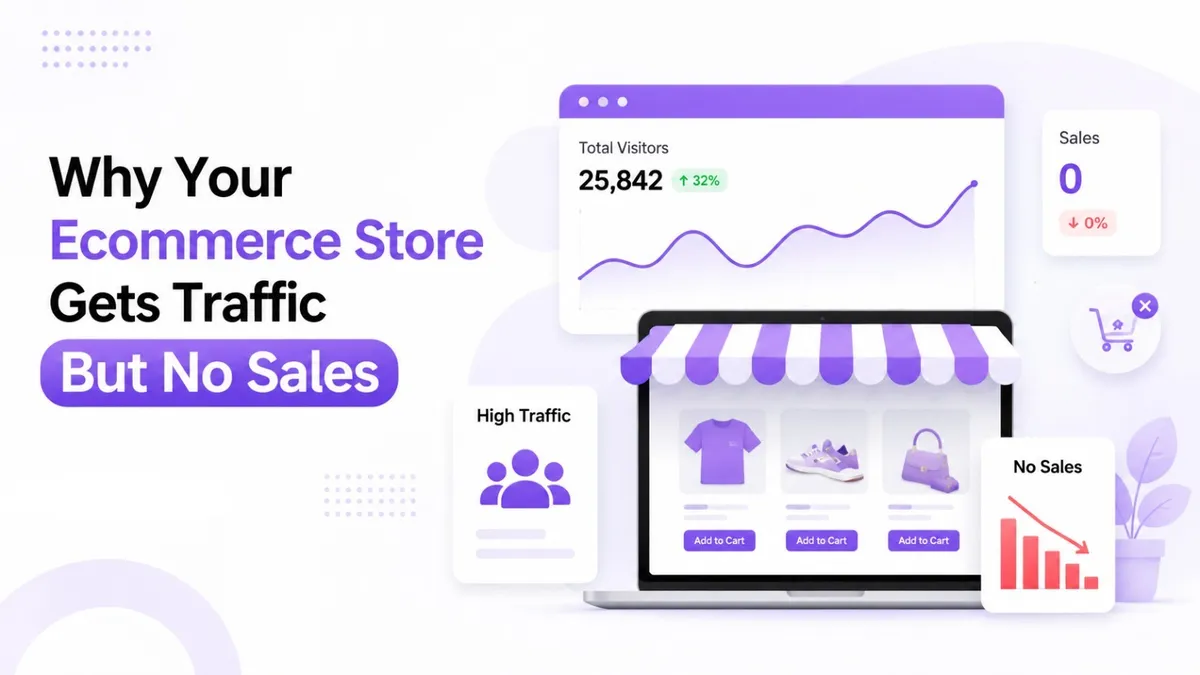
Getting traffic but no orders? Learn the most common reasons ecommerce stores fail to convert visitors into paying customers.
Understanding the core problem that needed to be solved
Getting traffic to your ecommerce store is often celebrated as a marketing win. You have invested in Google Ads, social media campaigns, influencer collaborations, and SEO. Your analytics dashboard shows visitors arriving steadily throughout the day.
Yet when you check the orders panel, there is silence. No new orders. No abandoned cart emails being triggered because nobody is adding items to cart.
This gap between traffic and sales is one of the most frustrating and expensive problems in ecommerce. It means your marketing budget is being spent to bring people to a store that is structurally incapable of closing the deal. The causes are rarely a single issue.
More often, it is a combination of factors that each add friction to the buying process, and their cumulative effect is devastating. The first and most common cause is poor product page design. Your product page is the digital equivalent of a shop assistant.
If it does not answer the questions a buyer has, does not present the product in its best light, and does not make the case for purchase compelling, the visitor will leave. Many ecommerce product pages list features without benefits. They describe what the product is but not what it does for the buyer.
They use manufacturer images that lack emotional appeal. They fail to answer objections before they arise. The second cause is weak calls to action.
A CTA button that says Add to Cart in a generic style on a generic color is a missed opportunity when it competes with dozens of other tabs the shopper has open. The CTA must be visually dominant, use persuasive copy, and be placed where the eye naturally lands after processing the value proposition. The third cause is slow loading speed.
Every second of delay costs ecommerce stores approximately seven percent of conversions according to decades of industry data. For a store generating one million dollars in annual revenue, a three-second delay represents a substantial annual loss. Beyond the direct conversion impact, slow sites are penalized by Google in search rankings, creating a vicious cycle where visibility decreases alongside conversion rates.
Key Takeaway
The fourth cause is lack of trust signals. An unknown store asking for payment and personal information without any evidence of legitimacy faces an enormous trust barrier. Visitors need to see that others have purchased successfully, that their data is protected, and that the store stands behind its products.
Without reviews, testimonials, security badges, and clear policies, the natural response is to leave and buy from a trusted retailer where these signals are established. The fifth cause is a complicated checkout process. Every additional field, every unnecessary step, every forced account creation requirement loses customers.
The checkout process should be ruthlessly simplified to remove any barrier between the decision to buy and the completion of the order. The sixth cause is unclear value proposition. If a visitor cannot understand within seconds what makes your store different and why they should buy from you rather than from a competitor, they will not stay to figure it out.
The seventh cause is wrong traffic sources. Not all traffic converts equally. Visitors from some sources may have high purchase intent while others are casually browsing.
If your traffic comes from sources that attract lookers rather than buyers, no amount of on-site optimization will fully fix the conversion problem. The eighth cause is poor mobile experience. With mobile commerce accounting for a dominant share of online sales, a mobile experience that is anything less than excellent is a conversion killer.
Tiny text, hard-to-tap buttons, slow loading on cellular connections, and forms that are painful to complete on a small screen all drive visitors away. The ninth cause is hidden costs. Surprise shipping fees, unexpected taxes, or minimum order requirements that appear only at checkout are among the top reasons for cart abandonment.
When a visitor has invested time in selecting products and entering information, discovering additional costs creates a negative emotional response that often leads to abandonment. The tenth cause is absence of social proof. Humans are social creatures who look to others for guidance on what to buy.
Best Practice
Without visible indicators that other people have purchased and been satisfied, the perceived risk of buying increases significantly. These ten causes compound each other. A visitor might tolerate one or two issues but will abandon when faced with several simultaneously.
The result is an ecommerce store that generates traffic consistently but converts at a fraction of its potential, leaving business owners frustrated and questioning their marketing investments. The frustration is compounded by the fact that the traffic numbers look healthy on paper, making it difficult to identify where the problem actually lies. Many store owners respond by increasing their advertising budget, pouring more money into a system that is fundamentally broken at the conversion level.
This is not a traffic problem. It is a conversion problem, and the solution lies not in attracting more visitors but in removing the barriers that prevent existing visitors from becoming customers. Understanding each of these ten causes is the first step toward building a store that actually converts the traffic you are already paying for.
This realization that traffic volume does not equal sales volume is the first and most important insight any ecommerce business owner must internalize. The moment you stop optimizing for traffic and start optimizing for conversion, everything changes. Your ad budget becomes more efficient because you are not sending visitors to a leaky bucket.
Your organic traffic starts generating measurable returns. The mindset shift from more traffic to better conversion is what separates struggling stores from thriving ones. Every optimization you make, every friction point you remove, every trust signal you add compounds over time to transform your store from a costly hobby into a revenue engine.
The businesses that succeed in ecommerce are not those with the biggest marketing budgets but those that have removed every barrier between their visitors and the buy button.
The strategic approach we developed and implemented
Fixing the traffic-to-sales conversion gap requires a systematic approach that addresses each cause in order of impact. The first priority is CTA optimization. Your call to action buttons should be the most visually prominent elements on your product pages.
Use a high-contrast color that stands out from your brand palette without clashing with other elements. The copy should be action-oriented and benefit-driven rather than generic. Instead of Add to Cart, consider phrases like Buy Now with Free Shipping or Add to Bag Secure Checkout.
The button should appear above the fold and again at multiple points as the visitor scrolls through the page. Surround the CTA with scarcity signals such as low stock indicators or time-limited offers to increase urgency and drive immediate action. A/B test different variations of button copy, color, placement, and size to find what resonates best with your specific audience.
The second priority is speed optimization. Implement a comprehensive performance improvement program across your entire store. Compress all images using modern formats like WebP which can reduce file sizes by up to thirty percent compared to JPEG or PNG.
Minify CSS, JavaScript, and HTML to reduce the amount of data the browser must download. Implement browser caching so returning visitors experience faster load times. Use a content delivery network to serve assets from servers geographically closer to your visitors.
Defer non-critical JavaScript so that above-the-fold content loads first without waiting for scripts to execute. Target a Largest Contentful Paint of under two point five seconds and a First Input Delay of under one hundred milliseconds as measured on real mobile devices. Test your site regularly using Google PageSpeed Insights, Lighthouse, and real user monitoring data from tools like Web Vitals.
The third priority is implementing comprehensive trust signals throughout the shopping experience. Install customer reviews on every product page using a platform like Yotpo, Judge. me, or Okendo.
Key Takeaway
Display review snippets with star ratings directly in search engine results using structured data markup to improve click-through rates from organic search. Show security badges from recognized providers like Norton, McAfee, or SSL certificates prominently near the checkout button and payment fields. Display guarantees clearly and prominently: free returns within thirty days, money-back guarantees, price match promises, satisfaction guarantees.
Add trust elements like real-time visitor counters showing how many people are viewing a product, recent purchase notifications displaying real transactions, and certified business credentials from industry associations. The fourth priority is checkout simplification. Implement a guest checkout option that does not require account creation as the default, not as a hidden alternative.
Reduce form fields to the absolute minimum required to process the transaction: email address, shipping address, and payment information. Show a clear progress indicator so customers know exactly how many steps remain in the process. Allow users to review their complete order before submitting the final payment.
Offer multiple payment options including all major credit cards, digital wallets like Apple Pay and Google Pay, and buy now pay later services like Klarna or Afterpay. Display trust badges and security assurances throughout the checkout process, not just on the payment page. The fifth priority is mobile-first design.
Your entire store should be designed for mobile and then adapted for desktop, not the reverse approach that most stores take. Use thumb-friendly button sizes of at least forty-eight pixels with adequate spacing between tappable elements. Ensure text is readable without zooming by using a minimum font size of sixteen pixels for body text.
Implement mobile-specific features like click-to-call buttons and one-tap payment options like Apple Pay and Google Pay. Test your mobile checkout flow on actual devices across different screen sizes and network conditions including slow 3G connections. The sixth priority is transparent pricing.
Key Takeaway
Display all costs upfront including shipping, taxes, and any applicable fees before the customer reaches the checkout page. If you offer free shipping above a certain order threshold, display this prominently on product pages, in the cart, and as a progress bar that shows how close the customer is to qualifying. Use a shipping calculator on the cart page so customers can see the total cost before entering the checkout flow, eliminating surprises.
The seventh priority is social proof integration. Install a social proof notification tool like Fomo, Nudgify, or Prooffactor that shows recent purchases, signups, or reviews in real time as visitors browse your store. Display the total number of customers served, orders fulfilled, or products sold as a prominent statistic on your homepage and product pages.
Showcase user-generated content such as customer photos and videos on product pages to provide authentic visual proof that real people use and enjoy your products. Highlight media mentions, awards, or certifications as third-party validation of your store credibility. The eighth priority is implementing a full conversion rate optimization framework that makes improvement a continuous process rather than a one-time fix.
Run A/B tests on headlines, product images, CTA copy, button colors, page layouts, pricing displays, and shipping offers. Use heatmaps and session recordings from tools like Hotjar or Crazy Egg to understand how visitors actually behave on your site rather than guessing. Analyze your analytics data to identify where visitors drop off in the funnel and prioritize fixes based on revenue impact rather than ease of implementation.
Establish a regular cadence of testing and optimization so that your store is always improving rather than stagnating. The ninth priority is aligning traffic sources with conversion goals. Audit your traffic sources to understand which channels deliver visitors with the highest purchase intent and conversion rates.
Pro Tip
Shift budget toward channels that attract buyers rather than browsers by analyzing conversion rate by source. Use UTM parameters and proper conversion tracking to measure channel-level performance accurately. Create different landing pages for different traffic sources to match visitor expectations and intent levels.
The tenth priority is continuous monitoring and iteration. Set up regular reporting dashboards that track conversion rate, average order value, cart abandonment rate, revenue per visitor, and customer acquisition cost. Review this data weekly and identify areas for improvement based on actual performance metrics.
Stay current with ecommerce best practices and evolving consumer behavior trends through industry publications and competitor analysis. Implement changes based on data rather than assumptions and measure the impact of every change you make.
Pro Tip
Measurable outcomes and business impact achieved
Traffic-to-sales conversion improved with strategic fixes
Optimized product pages for higher engagement
Reduced cart abandonment through checkout improvements
Implemented trust signals that increase customer confidence
Best Practice
Tools, platforms, and technologies powering the solution
Expert Recommendation
The most important lessons from this project
Key Takeaway
Common questions about our approach and methodology
The timeline depends on the scope of work. Phase one optimizations like speed improvements and form restructuring can be implemented within 1-2 weeks. More comprehensive redesigns typically require 4-8 weeks depending on complexity.
Not necessarily. Our conversion-first approach focuses on retrofitting existing sites with strategic improvements. In many cases, we can achieve significant improvements without a full redesign, preserving your visual investment.
We tie every optimization to specific, measurable business metrics. Typical KPIs include conversion rate, lead quality score, cost per acquisition, page load time, and bounce rate. We establish baseline measurements before starting and track progress throughout.
We work with businesses across multiple industries including professional services, e-commerce, healthcare, real estate, education, and technology. Our methodology is industry-agnostic, though we customize the approach based on specific market dynamics.
Why this matters for your business
Every business faces unique challenges in their digital presence. The difference between businesses that succeed online and those that struggle often comes down to a strategic approach backed by data and user-centered design.
Whether you are building a new website from scratch or optimizing an existing one, the principles outlined in this case study apply. Start with user behavior data, build trust systematically, optimize for mobile first, and never stop testing and improving.
Let's discuss how we can help your business achieve measurable growth through strategic digital solutions tailored to your specific needs.
Get Your Free Consultation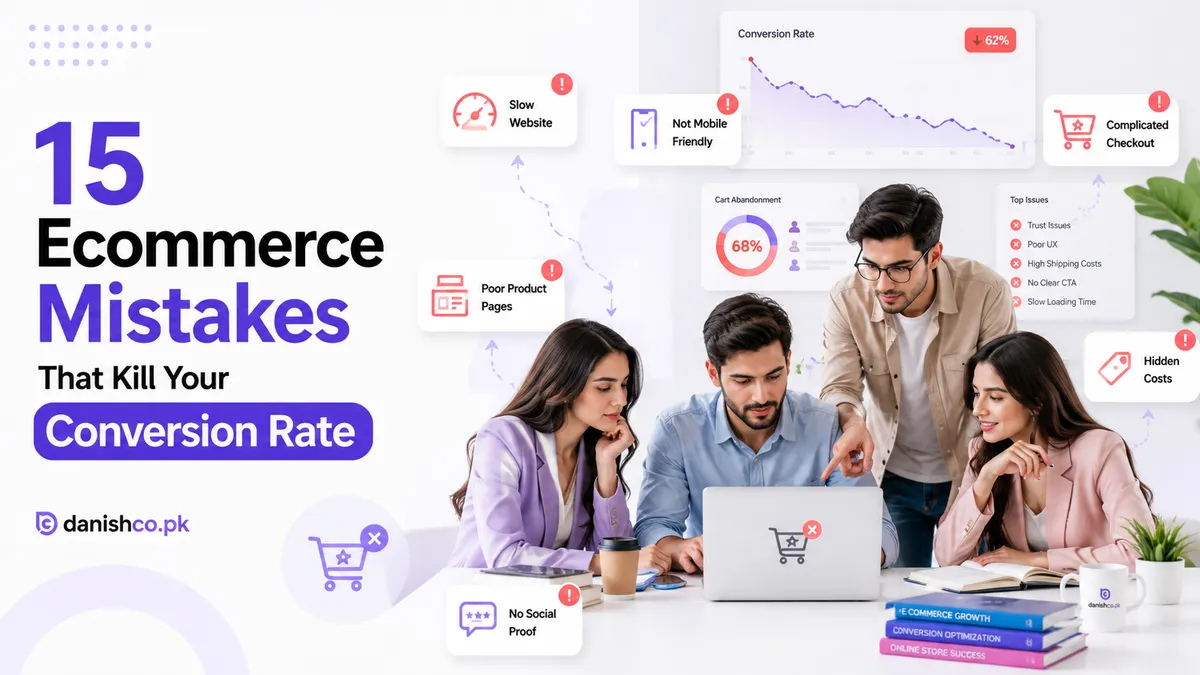 Ecommerce
Small mistakes can have a huge impact on your online sales. Learn the top ecommerce conversion killers and how to fix them.
 Ecommerce
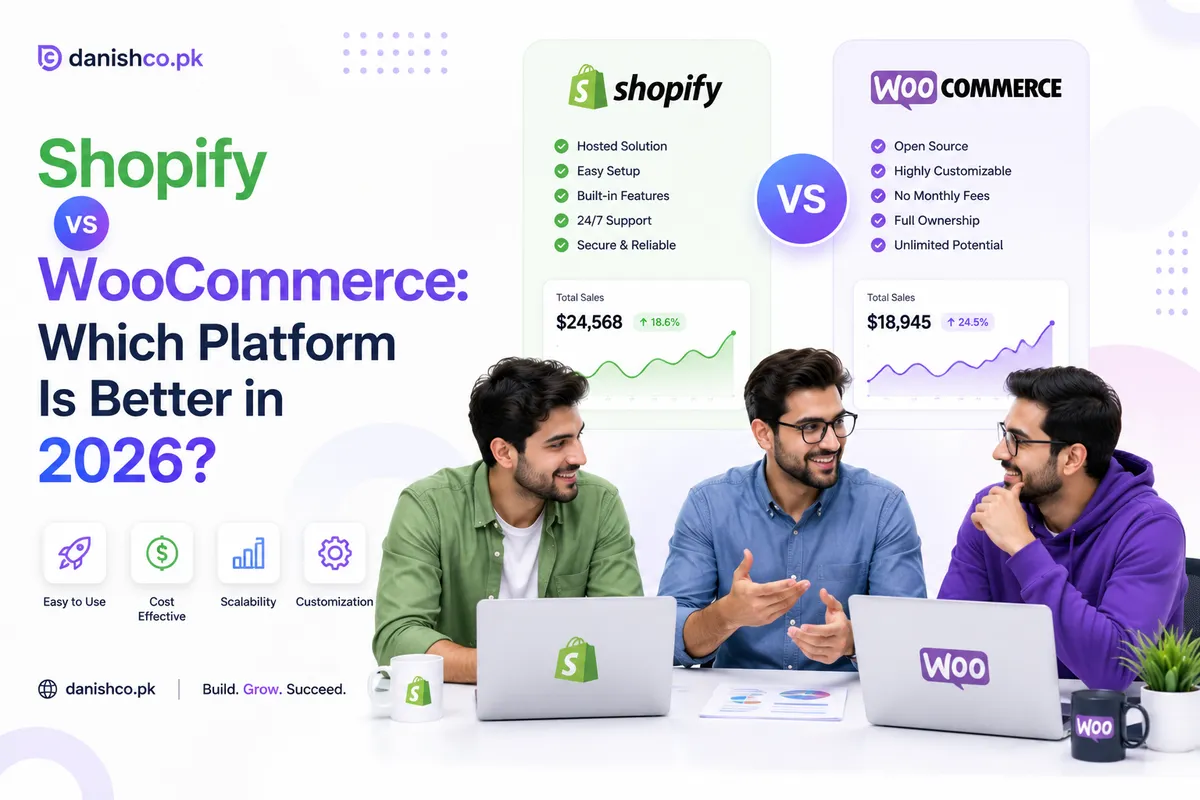
Compare Shopify and WooCommerce across pricing, features, SEO, scalability and ease of use to choose the right platform for your business.