
Loading...
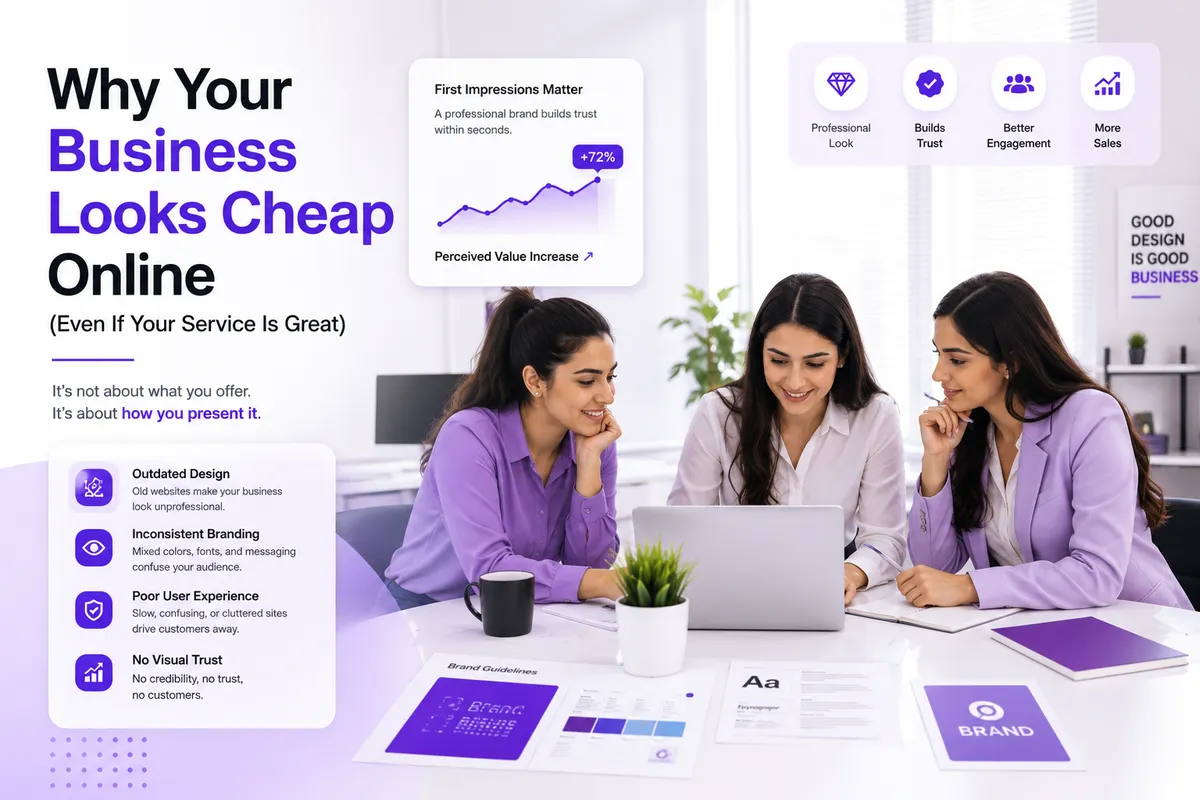
Your services may be excellent, but weak branding can make customers perceive your business as low quality. Learn how to create a premium online presence.
Understanding the core problem that needed to be solved
The gap between actual service quality and perceived brand quality is one of the most damaging yet fixable problems in business. A company can deliver exceptional results for its clients, have highly skilled team members, and offer genuine value, yet still be perceived as cheap, amateur, or unreliable simply because its online presence fails to communicate its true quality. This perception gap directly impacts the type of clients attracted, the prices that can be charged, and the overall growth trajectory of the business.
The first reason businesses look cheap online is poor website design. A website that uses outdated design patterns, cluttered layouts, generic templates, or low-quality imagery immediately signals low quality. Visitors make subconscious judgments about a business based on website design quality within milliseconds.
If the design looks cheap, the business is assumed to be cheap, regardless of the actual quality of services. This judgment happens before any content is read or any value proposition is evaluated. The second reason is inadequate content depth.
Businesses that look cheap online typically have thin content that lacks substance, authority, and value. Their website pages contain generic descriptions that could apply to any competitor. Their blog or resources section, if it exists, has minimal content that does not demonstrate expertise.
Professional service buyers evaluate content depth as evidence of expertise. A business that cannot communicate substantive information about its domain is assumed to lack the expertise it claims. The third reason is poor visual branding.
Cheap-looking businesses have inconsistent or low-quality visual branding. Their logo may be poorly designed, their color palette may be unappealing or inconsistent, their typography may be mismatched, and their overall visual identity may lack coherence. Professional branding communicates that the business has invested in its presentation, which implies it will invest equally in serving its clients.
Best Practice
The fourth reason is absence of social proof. Businesses that look cheap online fail to present evidence of their success. They have no testimonials, no case studies, no client logos, no results data, no media features.
Without social proof, the visitor has no reason to believe the business claims of expertise and results. The business is essentially asking prospects to trust based on self-reported capability, a request that sophisticated buyers will decline. The fifth reason is poor user experience.
A website that is slow to load, difficult to navigate, or broken on mobile devices creates a frustrating experience that reflects poorly on the business. Visitors interpret a poor digital experience as evidence of poor service quality. If the business cannot manage its own website effectively, how can it manage client projects effectively.
The sixth reason is inconsistent or absent brand voice. Cheap-looking businesses either have no discernible brand voice or have an inconsistent one. Their communications are generic, their tone is inconsistent, and their personality is absent.
A strong brand voice communicates confidence and clarity. An absent brand voice communicates uncertainty and lack of identity. These six reasons combine to create a perception of low quality that may be entirely inconsistent with the actual quality of services.
The business is losing opportunities not because of what it delivers but because of how it presents itself. The financial impact of this perception gap is substantial and compounding. A business perceived as cheap attracts price-sensitive customers who require more effort to acquire, generate lower margins, and have less loyalty.
The same business with a premium perception would attract higher-value customers who are easier to acquire, willing to pay more, and more likely to refer others. The gap between actual quality and perceived quality is not just an aesthetic problem. It is a structural business limitation that constrains pricing, customer quality, and growth potential.
Closing this gap is one of the highest-return investments a service business can make.
The strategic approach we developed and implemented
The solution is a comprehensive premium presence transformation program that addresses each of the six factors contributing to a cheap perception. The program is designed to elevate the online presence to a level that accurately reflects the quality of the underlying services, attracting better clients and enabling premium pricing. Phase one is website professionalization.
We redesign the website with a focus on quality-of-design signals: clean layout with generous whitespace, professional typography with proper hierarchy, high-quality imagery that reflects the brand character, refined color palette that communicates sophistication, and polished interactions that feel intentional rather than default. The redesign emphasis is not on adding features but on elevating the quality of every visual element. Phase two is content depth creation.
We develop comprehensive content that demonstrates expertise and authority in the business domain. This includes detailed service pages that go beyond surface descriptions to explain methodology, approach, and outcomes; case studies that document specific client challenges and measurable results; thought leadership articles that address industry topics with insight and originality; and resource materials that provide genuine value to visitors. The content strategy positions the business as a knowledgeable authority rather than a generic service provider.
Phase three is visual branding refinement. The visual identity is professionally developed or refined to communicate quality and sophistication. This includes logo refinement or redesign if needed, color palette development that communicates the intended brand personality, typography selection that enhances readability and professionalism, and visual system guidelines that ensure consistency across all applications.
The investment in professional visual branding communicates that the business takes itself seriously. Phase four is social proof system development. A systematic approach to collecting, managing, and presenting social proof is implemented.
Testimonials are gathered from past clients with full attribution. Case studies are developed with structured formats that document specific results. Client logos are collected and displayed professionally.
Pro Tip
Media features and press mentions are highlighted. The social proof system ensures that evidence of capability is visible at every stage of the visitor journey. Phase five is user experience optimization.
Website performance is optimized to meet premium standards: sub-two-second load time, flawless mobile experience, intuitive navigation, and polished interactions. User experience testing identifies and resolves friction points. The goal is a digital experience that feels smooth, professional, and effortless.
Phase six is brand voice development. A distinctive brand voice is defined and consistently applied across all communications. The voice reflects the brand personality and resonates with the target audience.
A voice guide documents tone, language patterns, and examples for different communication contexts. The consistent application of brand voice across website, social media, email, and all communications creates a unified personality that builds recognition and trust. The cumulative effect of these six phases is a complete transformation in how the business is perceived online.
The same services, same team, and same prices are now presented in a way that communicates premium quality, attracting better clients, enabling higher pricing, and supporting sustainable growth. The transformation does not require changing what the business delivers. It requires changing how the business presents what it delivers.
The investment in premium presentation pays for itself through better customer acquisition, higher margins, and stronger competitive positioning. Businesses that make this investment consistently outperform competitors who offer comparable services but fail to communicate their true quality through their online presence. The result is not just a better-looking website but a fundamentally better business capable of attracting the clients, projects, and revenue that reflect the actual quality of its services.
Pro Tip
Measurable outcomes and business impact achieved
Website professionalization with premium quality-of-design signals
Comprehensive content demonstrating expertise and authority
Professional visual branding refinement and social proof system
Distinctive brand voice for consistent, confident communications
Best Practice
Tools, platforms, and technologies powering the solution
Expert Recommendation
The most important lessons from this project
Key Takeaway
Common questions about our approach and methodology
The timeline depends on the scope of work. Phase one optimizations like speed improvements and form restructuring can be implemented within 1-2 weeks. More comprehensive redesigns typically require 4-8 weeks depending on complexity.
Not necessarily. Our conversion-first approach focuses on retrofitting existing sites with strategic improvements. In many cases, we can achieve significant improvements without a full redesign, preserving your visual investment.
We tie every optimization to specific, measurable business metrics. Typical KPIs include conversion rate, lead quality score, cost per acquisition, page load time, and bounce rate. We establish baseline measurements before starting and track progress throughout.
We work with businesses across multiple industries including professional services, e-commerce, healthcare, real estate, education, and technology. Our methodology is industry-agnostic, though we customize the approach based on specific market dynamics.
Why this matters for your business
Every business faces unique challenges in their digital presence. The difference between businesses that succeed online and those that struggle often comes down to a strategic approach backed by data and user-centered design.
Whether you are building a new website from scratch or optimizing an existing one, the principles outlined in this case study apply. Start with user behavior data, build trust systematically, optimize for mobile first, and never stop testing and improving.
Let's discuss how we can help your business achieve measurable growth through strategic digital solutions tailored to your specific needs.
Get Your Free Consultation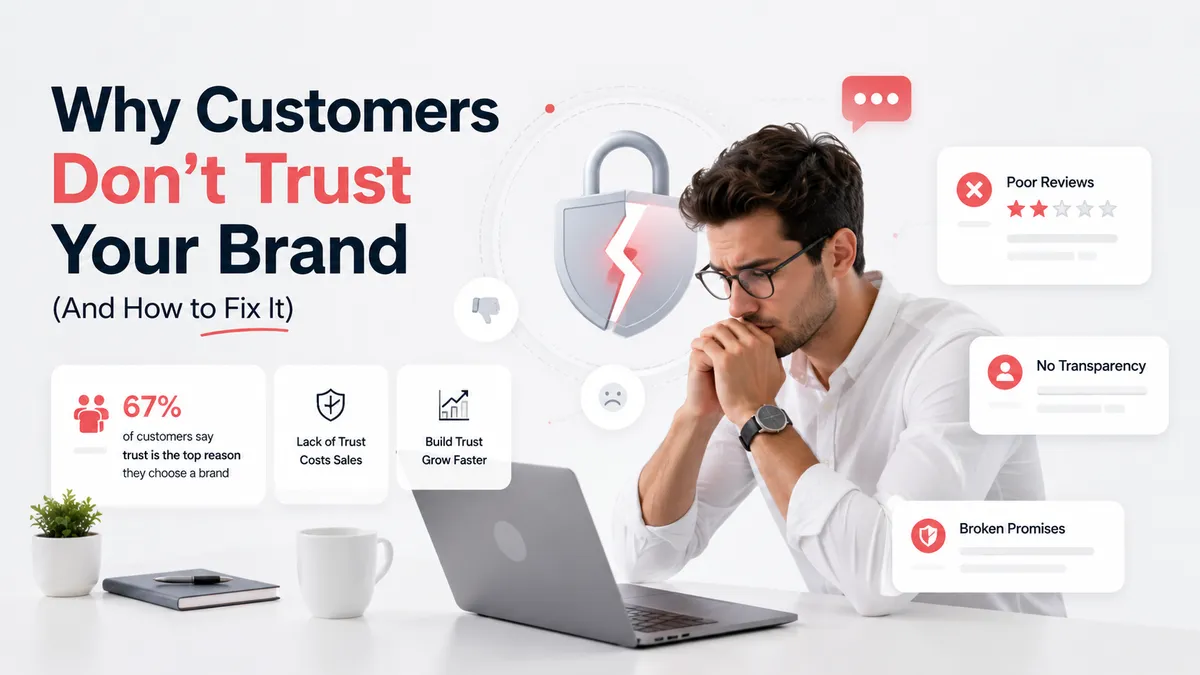 Branding
Trust is the foundation of every successful business. Discover why customers hesitate to trust your brand and learn practical strategies to build credibility.
 Branding
Small branding mistakes can cost you customers. Learn the most common branding errors and how to create a professional business image.