
Loading...

Small branding mistakes can cost you customers. Learn the most common branding errors and how to create a professional business image.
Understanding the core problem that needed to be solved
Small businesses often operate under the assumption that branding is a luxury reserved for large corporations with significant marketing budgets. This misconception leads to a series of common mistakes that collectively create an unprofessional impression, causing potential customers to question the business credibility before they have even engaged with its services. The financial impact of these mistakes is substantial: a business that appears unprofessional loses customers not because of inferior offerings but because of presentation that fails to inspire confidence.
The first mistake is inconsistent visual identity. A business that uses different logo variations, mismatched colors, and conflicting typography across its website, social media, business cards, and marketing materials signals disorganization. The inconsistency suggests that if the business cannot manage its own visual presentation, it will likely be equally careless with client work.
Consistency in visual identity is the minimum standard for appearing professional, yet many small businesses treat it as optional. The second mistake is poor quality visual assets. Low-resolution logos, pixelated images, clip art graphics, and poorly designed marketing materials communicate amateurism.
In a digital environment where consumers evaluate visual quality as a proxy for service quality, substandard visuals are immediately disqualifying. A business that cannot invest in basic professional design assets signals that it does not take itself seriously enough to warrant customer investment. The third mistake is vague or inconsistent messaging.
A business that describes itself differently on its website compared to its social media profiles, that uses different taglines, or that fails to clearly communicate what it does and who it serves creates confusion. Confused prospects do not become customers. They move on to competitors whose messaging is clear and consistent.
The fourth mistake is neglecting the digital storefront. A website that looks outdated, loads slowly, or functions poorly on mobile devices communicates that the business is not keeping pace with modern standards. In an era where a website is often the first and most important impression a business makes, a neglected digital presence is a powerful negative signal about the business overall quality and attention to detail.
Best Practice
The fifth mistake is absence of brand guidelines. Without documented standards for logo usage, color application, typography, imagery, and tone of voice, every piece of marketing material becomes an independent design decision. Over time, this creates a fragmented brand identity that erodes recognition and trust.
Brand guidelines are not a luxury for small businesses. They are a practical tool that ensures consistency across every customer touchpoint without requiring a design expert to make decisions each time. These five mistakes compound each other.
A business with inconsistent visuals, poor quality assets, vague messaging, a neglected website, and no brand guidelines does not just appear slightly unprofessional. It appears fundamentally unreliable, and in a competitive market, that perception is fatal. The financial impact of these branding mistakes extends far beyond the immediate loss of a single sale.
When a business appears unprofessional, it fundamentally limits its pricing power, customer acquisition channels, and growth trajectory. Customers who perceive a business as amateurish will not pay premium prices, regardless of the actual quality of service delivered. This means the business must compete on price alone, compressing margins and limiting the resources available for improvement and growth.
The effect compounds over time: lower margins mean less investment in branding, which reinforces the unprofessional perception, creating a downward spiral that becomes increasingly difficult to escape. Research across multiple service industries consistently demonstrates that perceived professionalism directly correlates with willingness to pay. A business that appears professional can command prices twenty to forty percent higher than an otherwise identical competitor that appears unprofessional.
For a small business generating PKR 5 million in annual revenue, this perception gap represents PKR 1 to 2 million in lost revenue annually. Over a five-year period, the cumulative cost of appearing unprofessional can exceed PKR 5 to 10 million in lost revenue, pricing power, and growth opportunities. The fifth mistake that compounds the previous four is the absence of a cohesive brand strategy.
Best Practice
Many small businesses operate without any documented understanding of who they are, who they serve, why they are different, or how they want to be perceived. Every branding decision is made in isolation, guided by personal preference rather than strategic direction. The result is a collection of disconnected marketing materials that may each look acceptable individually but fail to present a unified brand identity.
This absence of strategy means that every new marketing initiative starts from zero, with no brand equity carried forward from previous efforts. The business must rebuild recognition and trust with each new campaign, wasting the cumulative marketing investment that a strategic approach would have captured and compounded. The digital aspect of this problem deserves particular attention because online presence is often the first and most frequent interaction potential customers have with a small business.
A website that loads slowly, displays poorly on mobile devices, uses generic templates, or contains outdated information signals neglect and amateurism. Social media profiles with inconsistent branding, irregular posting, and low-quality content reinforce this impression. In an era where consumers research businesses online before making purchasing decisions, the digital storefront has become the primary determinant of perceived professionalism.
A small business may deliver exceptional service in person, but if its digital presence appears unprofessional, many potential customers will never reach the point of experiencing that service firsthand. The gap between actual quality and perceived quality that opens through weak digital branding represents a structural disadvantage that no amount of in-person excellence can fully overcome. The path to professional branding does not require a massive budget or a complete business overhaul.
It requires awareness of these common mistakes and a systematic commitment to addressing them one by one. The businesses that succeed in making this transition are those that recognize professional branding as an investment rather than an expense, understanding that the cost of appearing unprofessional far exceeds the cost of appearing professional. Small businesses that successfully professionalize their branding unlock a virtuous cycle: improved perception attracts better clients, which generates higher revenue and more impressive case studies, which further enhances brand perception and attracts even better opportunities.
Breaking the cycle of unprofessional branding is one of the highest-leverage investments a small business can make, because it addresses the root cause of multiple business challenges simultaneously.
The strategic approach we developed and implemented
The solution is a structured brand professionalization program that addresses each of the five mistakes through practical, affordable interventions designed for small business budgets and timelines. The program is organized into five phases, each targeting one mistake with specific actionable steps that can be implemented without requiring a full brand overhaul or significant financial investment. Phase one addresses inconsistent visual identity through the creation of a simple but comprehensive brand guideline document.
Unlike corporate brand books that run hundreds of pages, this document focuses on the essentials that a small business needs to maintain consistency: primary and secondary logo versions, approved color palette with hex codes, typography selection with web-safe fallbacks, approved imagery style, and basic usage rules. The guideline is designed to be practical and usable, not theoretical. It is shared with every team member, freelancer, and vendor who creates materials for the business.
Phase two addresses poor quality visual assets through a systematic asset upgrade program. Existing visual materials are audited and prioritized for replacement based on visibility and impact. The highest-priority items are those that appear most frequently in customer-facing contexts: website imagery, social media profile graphics, email templates, and presentation templates.
Professional versions are created or commissioned. For businesses with limited budgets, modern design tools and high-quality template resources make professional-grade assets accessible at reasonable costs. Phase three addresses vague messaging through a messaging framework development process.
The business core value proposition, target audience definition, key differentiators, and brand personality are documented in a one-page messaging guide. This guide serves as the reference for all communications, ensuring that the business describes itself consistently across every channel. The messaging framework also includes sample language for common scenarios: website hero text, social media bios, elevator pitch, and common customer questions.
Phase four addresses digital storefront neglect through a targeted website improvement program. Rather than recommending a full redesign, we identify the highest-impact changes that can be made to the existing site to improve professionalism: updating the hero section with clear messaging, replacing low-quality images, ensuring mobile responsiveness, improving page speed, adding current testimonials, and refreshing content to remove outdated information. These changes typically cost a fraction of a full redesign while producing immediate improvement in perceived professionalism.
Pro Tip
Phase five addresses the absence of brand guidelines by providing a lightweight, actionable brand standards document that the business can actually use. The document is designed to be referenced regularly, not filed away. It includes practical checklists for common scenarios: what to check before publishing social media content, what to verify when commissioning new design work, and how to evaluate whether new marketing materials are on-brand.
The cumulative effect of these five phases is a transformation in how the business is perceived. The same offerings, same team, and same prices are presented in a way that inspires confidence rather than doubt, converting more prospects into customers without changing anything about the core service. The implementation of this brand professionalization program follows a practical timeline that respects small business constraints.
The first two weeks focus on the highest-impact, lowest-effort improvements: updating social media profiles to match brand colors and messaging, replacing the most visible low-quality images on the website, clarifying the hero section messaging, and creating a simple brand reference document. These quick wins create immediate improvement in perceived professionalism and build momentum for the more substantial work ahead. Weeks three through six address the deeper structural improvements: developing the full messaging framework, upgrading core visual assets, implementing website improvements, and creating the brand guidelines document.
Weeks seven through twelve focus on refinement and consistency: applying the brand guidelines to all existing materials, training team members on brand standards, and establishing processes for maintaining consistency in future communications. The total investment for a comprehensive brand professionalization program ranges from PKR 100,000 to PKR 350,000 depending on the current state of the brand and the scope of work required. For most small businesses, this investment is recovered within three to six months through increased conversion rates, higher average project values, and improved customer acquisition efficiency.
Key Takeaway
Beyond the direct financial return, professional branding creates intangible but valuable assets: increased confidence in sales conversations, easier recruitment of talent who want to work with a professional organization, and greater resilience against competitive pressure. Businesses that invest in professional branding build a foundation for sustainable growth that becomes increasingly valuable over time, as each year of consistent professional presentation compounds the brand equity accumulated through previous years of disciplined brand management. Measuring the impact of this professionalization program requires tracking several key indicators over time.
The most immediate metric is website engagement improvement: reduced bounce rate, increased time on page, and higher conversion rates on key actions such as contact form submissions or phone calls. These metrics typically show improvement within the first two weeks of implementing visual and messaging improvements. Medium-term metrics include social media engagement growth, increased referral traffic, and improved email open and click-through rates as consistent branding makes communications more recognizable and trusted.
Long-term metrics include average project value increases, customer acquisition cost reduction, and customer lifetime value improvement. Businesses should track these metrics monthly for the first quarter and quarterly thereafter to quantify the return on their branding investment. The data collected serves both to validate the investment and to identify additional improvement opportunities, creating a continuous cycle of brand refinement that drives ongoing business growth.
The most successful implementations of this program share common characteristics: committed leadership involvement in brand decisions, willingness to invest in quality design and content, consistent application of brand guidelines across all channels, and regular measurement and refinement of brand performance. Businesses that treat branding as a strategic priority rather than a one-time project achieve the greatest long-term returns from their professionalization investment.
Pro Tip
Measurable outcomes and business impact achieved
Comprehensive brand guideline document for consistent visual identity
Systematic asset upgrade program for professional-grade visuals
One-page messaging framework for clear, consistent communications
High-impact website improvements without full redesign costs
Best Practice
Tools, platforms, and technologies powering the solution
Expert Recommendation
The most important lessons from this project
Key Takeaway
Common questions about our approach and methodology
The timeline depends on the scope of work. Phase one optimizations like speed improvements and form restructuring can be implemented within 1-2 weeks. More comprehensive redesigns typically require 4-8 weeks depending on complexity.
Not necessarily. Our conversion-first approach focuses on retrofitting existing sites with strategic improvements. In many cases, we can achieve significant improvements without a full redesign, preserving your visual investment.
We tie every optimization to specific, measurable business metrics. Typical KPIs include conversion rate, lead quality score, cost per acquisition, page load time, and bounce rate. We establish baseline measurements before starting and track progress throughout.
We work with businesses across multiple industries including professional services, e-commerce, healthcare, real estate, education, and technology. Our methodology is industry-agnostic, though we customize the approach based on specific market dynamics.
Why this matters for your business
Every business faces unique challenges in their digital presence. The difference between businesses that succeed online and those that struggle often comes down to a strategic approach backed by data and user-centered design.
Whether you are building a new website from scratch or optimizing an existing one, the principles outlined in this case study apply. Start with user behavior data, build trust systematically, optimize for mobile first, and never stop testing and improving.
Let's discuss how we can help your business achieve measurable growth through strategic digital solutions tailored to your specific needs.
Get Your Free Consultation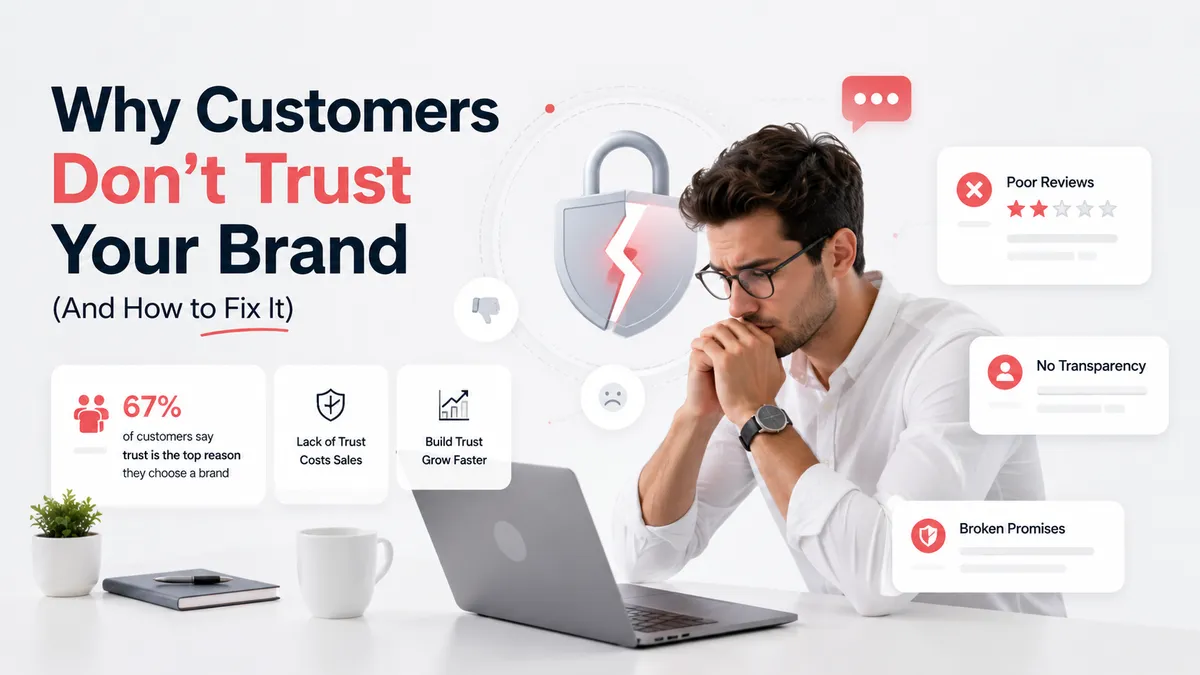 Branding
Trust is the foundation of every successful business. Discover why customers hesitate to trust your brand and learn practical strategies to build credibility.
 Branding
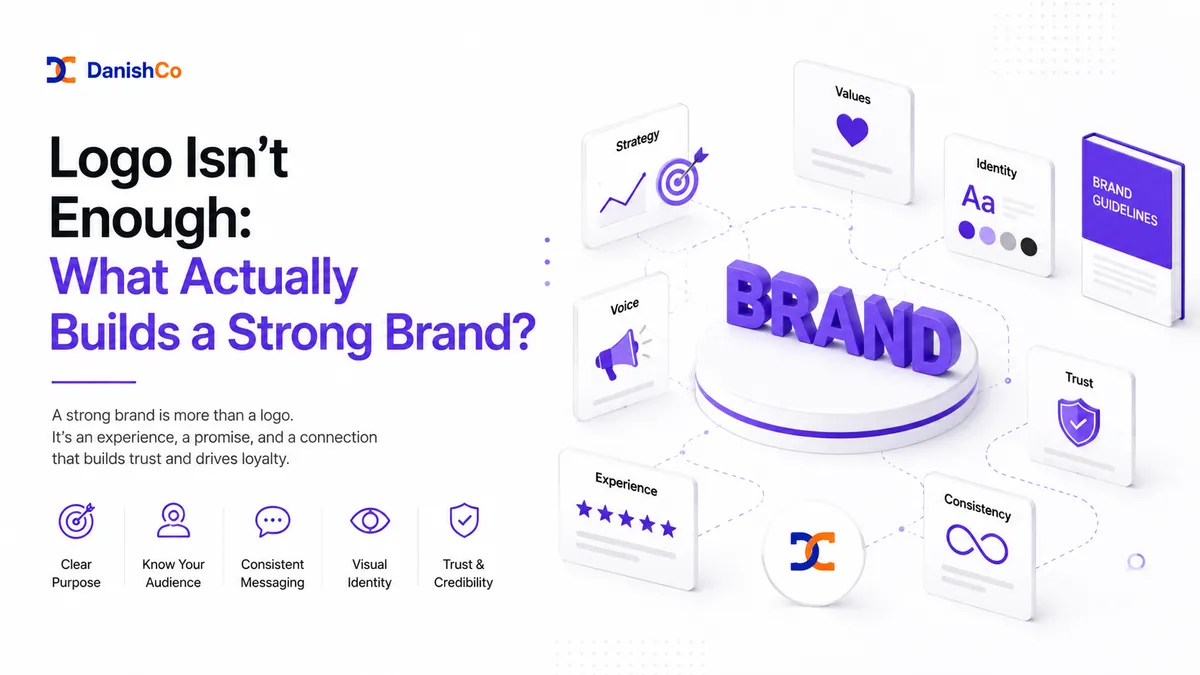
A logo is only one part of your brand. Discover the key elements that create a memorable and trusted business identity.