
Loading...
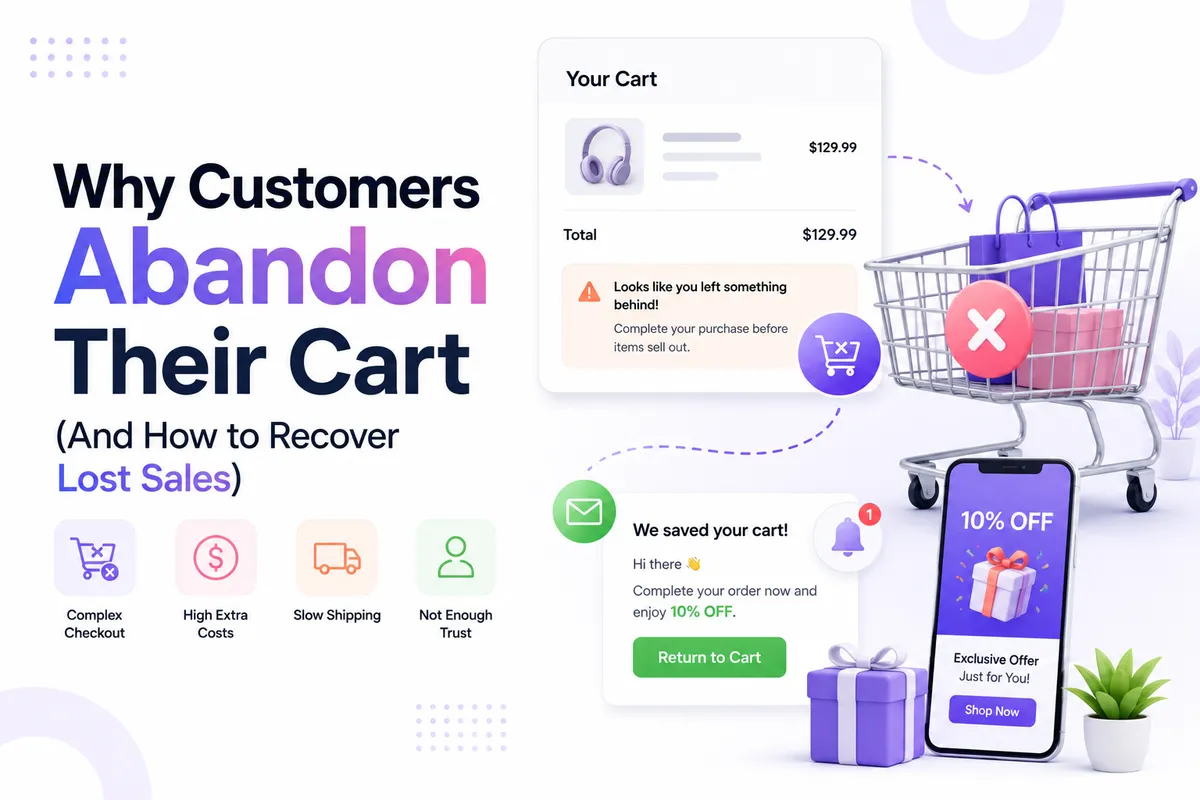
Cart abandonment is one of the biggest challenges in ecommerce. Learn why customers leave and how to recover more sales.
Understanding the core problem that needed to be solved
Cart abandonment is the silent revenue killer of ecommerce. Across the industry, approximately seventy percent of online shopping carts are abandoned before the purchase is completed. This statistic represents an enormous amount of lost revenue, and for most stores, the majority of this lost revenue is recoverable.
Understanding why customers abandon their carts is the first step toward bringing them back. The most common cause of cart abandonment is unexpected costs. Shipping fees, taxes, handling charges, and other costs that appear only when the customer reaches the checkout page are the single biggest driver of abandonment.
The customer has already decided to buy based on the product price they saw, and any additional costs feel like a bait and switch. The emotional response to unexpected costs is strong enough to cause abandonment even when the total is still reasonable. The second cause is forced account creation.
Many stores require customers to create an account before completing their purchase. This adds friction, requires time and effort, and raises privacy concerns. Customers who want a quick, one-time purchase are particularly resistant to account creation, and many will abandon rather than go through the process.
The third cause is a complicated or lengthy checkout process. Every additional step, every extra form field, every redundant question increases the likelihood of abandonment. The ideal checkout process is as short as possible while still collecting the information necessary to process the order.
The fourth cause is payment security concerns. When customers do not see security badges, SSL certificates, or recognizable payment methods, they worry about the safety of their financial information. This concern is especially acute on unfamiliar or lesser-known stores.
The fifth cause is limited payment options. If customers cannot pay using their preferred method, whether that is a specific credit card, a digital wallet, or a buy now pay later service, many will abandon rather than find an alternative. The sixth cause is slow website performance.
Pro Tip
A slow-loading checkout page, images that take time to render, or delays in updating the cart can all cause frustration and abandonment. At the checkout stage, customers are already committed enough to have entered the process, and performance issues at this critical moment can feel especially frustrating. The seventh cause is lack of return policy clarity.
Customers want to know what happens if the product does not work out. If the return policy is hard to find, confusing, or appears restrictive, many will not take the risk of completing the purchase. The eighth cause is comparison shopping behavior.
Many customers add items to cart as part of their research process, intending to compare prices and options across multiple stores before making a final decision. Your store may be one of several tabs open, and the cart serves as a holding area rather than a commitment to purchase. The ninth cause is technical errors during checkout.
Credit card declines that should not have happened, error messages that do not explain what went wrong, pages that fail to load, and other technical issues cause abandonment through frustration and concern about reliability. The tenth cause is trust issues with the store. If the store looks unprofessional, has no reviews, lacks contact information, or does not inspire confidence, customers will abandon at the final stage because the perceived risk of completing the transaction outweighs the desire for the product.
These ten causes of cart abandonment interact with each other. A customer who encounters unexpected shipping costs and is then asked to create an account on a slow-loading checkout page with no security badges visible is much more likely to abandon than a customer who encounters any single one of these issues alone. The cumulative effect of multiple friction points is what makes cart abandonment such a persistent challenge across the ecommerce industry.
Best Practice
The good news is that each of these causes can be addressed, and even partial improvements can recover a meaningful portion of lost sales. Understanding the psychology behind cart abandonment is essential for developing effective recovery strategies. When a customer abandons their cart, they are not rejecting your products entirely.
They are encountering a barrier that temporarily outweighs their desire to complete the purchase. The key to recovery is identifying and removing that barrier. The psychology of abandonment follows a predictable pattern.
The customer finds your product, adds it to their cart, and begins the checkout process with positive intent. At some point during checkout, they encounter a friction point that creates doubt, frustration, or concern. This negative emotional response shifts their mental state from ready to buy to hesitant.
If the friction is not resolved, hesitation turns into abandonment. The customer may tell themselves they will come back later, but most never do without a targeted recovery effort. The most effective recovery strategies work by addressing the specific barrier that caused the abandonment while also providing a compelling reason to complete the purchase now rather than later.
This is why a one-size-fits-all recovery approach is less effective than a segmented strategy that addresses different abandonment causes differently. A customer who abandoned due to shipping cost concerns needs a different recovery message than one who abandoned due to technical issues or comparison shopping behavior. By understanding the psychology of abandonment, you can craft recovery messages that resonate with the customer's specific situation and motivation.
The strategic approach we developed and implemented
Recovering lost sales from cart abandonment requires a two-pronged strategy: preventing abandonment from happening in the first place and recovering sales after abandonment occurs. Both approaches are essential for maximizing revenue from your existing traffic. For prevention, the most impactful fix is transparent pricing from the start.
Display all costs, including shipping, taxes, and fees, as early as possible in the shopping journey. Show shipping costs on the product page or provide a shipping calculator on the cart page. If you offer free shipping above a threshold, show a progress bar that tells customers how close they are to qualifying.
Eliminate surprises entirely and the most common cause of abandonment disappears. The second prevention strategy is offering guest checkout as the default. Make it the primary option, not a hidden alternative.
Only ask for account creation after the purchase is complete, when the customer already has a positive association with your store and may be willing to create an account for future convenience. The third prevention strategy is checkout simplification. Audit every field in your checkout process and remove anything that is not absolutely necessary.
Implement address auto-complete to speed up form filling. Show a clear progress indicator. Allow customers to review their order before submitting.
Keep the checkout process to as few steps as possible. The fourth prevention strategy is building trust at the checkout stage. Display security badges from recognized providers prominently throughout the checkout process, not just on the payment page.
Show accepted payment method logos. Display your return policy in a summarized format near the checkout button. Include a customer service phone number or chat option for immediate assistance.
The fifth prevention strategy is offering multiple payment options. Integrate major credit cards, digital wallets like Apple Pay and Google Pay, and buy now pay later services. Different customer segments have different payment preferences, and offering choice reduces abandonment across all segments.
Best Practice
The sixth prevention strategy is performance optimization specifically for the checkout flow. Ensure your checkout pages load in under two seconds. Optimize images, minimize scripts, and use a reliable hosting infrastructure.
Test the checkout process regularly on different devices and network conditions. For recovery after abandonment, the most effective strategy is abandoned cart email sequences. Send a series of three to four emails to customers who added items to cart but did not complete the purchase.
The first email should be sent within one hour of abandonment, reminding the customer of what they left behind with a direct link back to their cart. The second email, sent twenty-four hours later, can include social proof like customer reviews of the products they were considering. The third email, sent forty-eight to seventy-two hours later, can offer a small incentive like free shipping or a discount to encourage completion.
The fourth email, sent after about a week, can create urgency by noting low stock or that items in the cart may be time-limited. The second recovery strategy is exit-intent popups. When a visitor moves their cursor toward leaving the page, display a targeted popup that offers an incentive to complete the purchase or captures their email address so you can follow up later.
The popup should be relevant to what they were viewing and offer genuine value rather than being generic. The third recovery strategy is retargeting ads. Use Facebook and Google retargeting pixels to show ads to customers who abandoned their cart, reminding them of the products they left behind and offering a path back to complete the purchase.
Coordinate retargeting ad timing with email sequences for maximum impact. The fourth recovery strategy is SMS reminders. For customers who provided their phone number during checkout, send a polite SMS reminder about their abandoned cart.
Best Practice
SMS messages have higher open rates than email and can be effective for time-sensitive recovery. The fifth recovery strategy is cart saving functionality. Implement a feature that saves the contents of abandoned carts so that when customers return to your store, their items are still waiting for them.
This reduces the friction of having to rebuild their cart and makes it easier to complete the purchase they had started. Combining prevention and recovery strategies creates a comprehensive approach to cart abandonment that can recover a significant portion of otherwise lost revenue. Most stores can recover ten to fifteen percent of abandoned carts through email sequences alone, and combining multiple recovery channels can increase this to thirty percent or more.
The most successful cart abandonment recovery programs combine multiple recovery channels in a coordinated sequence that increases the probability of recovery at each touchpoint. The recovery sequence should begin immediately after abandonment with an exit-intent popup or email, continue with follow-up reminders at strategic intervals, and escalate with more compelling offers for customers who do not respond to initial recovery attempts. The key is to maintain a balance between persistence and respect for the customer's decision.
Too few recovery attempts leave revenue on the table while too many attempts can annoy customers and damage your brand perception. Test different recovery sequences to find the optimal frequency and messaging for your specific audience. Use A/B testing to optimize each element of your recovery communications including subject lines, email copy, incentive offers, timing, and channel selection.
Track the incremental revenue generated by your recovery program and compare it to the cost of implementation to measure return on investment. Remember that recovered customers are often more valuable than first-time direct purchasers because they have experienced your customer service through the recovery process and may develop stronger loyalty as a result. A well-executed cart abandonment recovery program is one of the highest-return investments an ecommerce store can make, recovering revenue that would otherwise be lost with relatively low implementation and operational costs.
Key Takeaway
The key takeaway for ecommerce business owners is that cart abandonment is not an inevitable cost of doing business online but a solvable problem with proven strategies that can recover a substantial portion of otherwise lost revenue. By understanding the specific reasons your customers abandon their carts and implementing targeted prevention and recovery strategies, you can transform your biggest source of lost revenue into a significant driver of incremental sales and customer loyalty. Every percentage point of reduction in cart abandonment rate represents real recovered revenue that flows directly to your bottom line, making cart abandonment optimization one of the most financially impactful investments an ecommerce store can make with relatively low implementation costs and measurable, immediate results.
By combining prevention strategies that stop abandonment before it happens with recovery strategies that bring customers back after they leave, you can create a comprehensive approach that maximizes revenue from every visitor who shows purchase intent while simultaneously building a better shopping experience that encourages future visits and repeat purchases.
Pro Tip
Measurable outcomes and business impact achieved
Reduced cart abandonment through targeted strategies
Recovered lost sales with automated email sequences
Optimized checkout flow for higher completion rates
Implemented trust signals that reduce checkout hesitation
Best Practice
Tools, platforms, and technologies powering the solution
Expert Recommendation
The most important lessons from this project
Key Takeaway
Common questions about our approach and methodology
The timeline depends on the scope of work. Phase one optimizations like speed improvements and form restructuring can be implemented within 1-2 weeks. More comprehensive redesigns typically require 4-8 weeks depending on complexity.
Not necessarily. Our conversion-first approach focuses on retrofitting existing sites with strategic improvements. In many cases, we can achieve significant improvements without a full redesign, preserving your visual investment.
We tie every optimization to specific, measurable business metrics. Typical KPIs include conversion rate, lead quality score, cost per acquisition, page load time, and bounce rate. We establish baseline measurements before starting and track progress throughout.
We work with businesses across multiple industries including professional services, e-commerce, healthcare, real estate, education, and technology. Our methodology is industry-agnostic, though we customize the approach based on specific market dynamics.
Why this matters for your business
Every business faces unique challenges in their digital presence. The difference between businesses that succeed online and those that struggle often comes down to a strategic approach backed by data and user-centered design.
Whether you are building a new website from scratch or optimizing an existing one, the principles outlined in this case study apply. Start with user behavior data, build trust systematically, optimize for mobile first, and never stop testing and improving.
Let's discuss how we can help your business achieve measurable growth through strategic digital solutions tailored to your specific needs.
Get Your Free Consultation Ecommerce
Getting traffic but no orders? Learn the most common reasons ecommerce stores fail to convert visitors into paying customers.
 Ecommerce
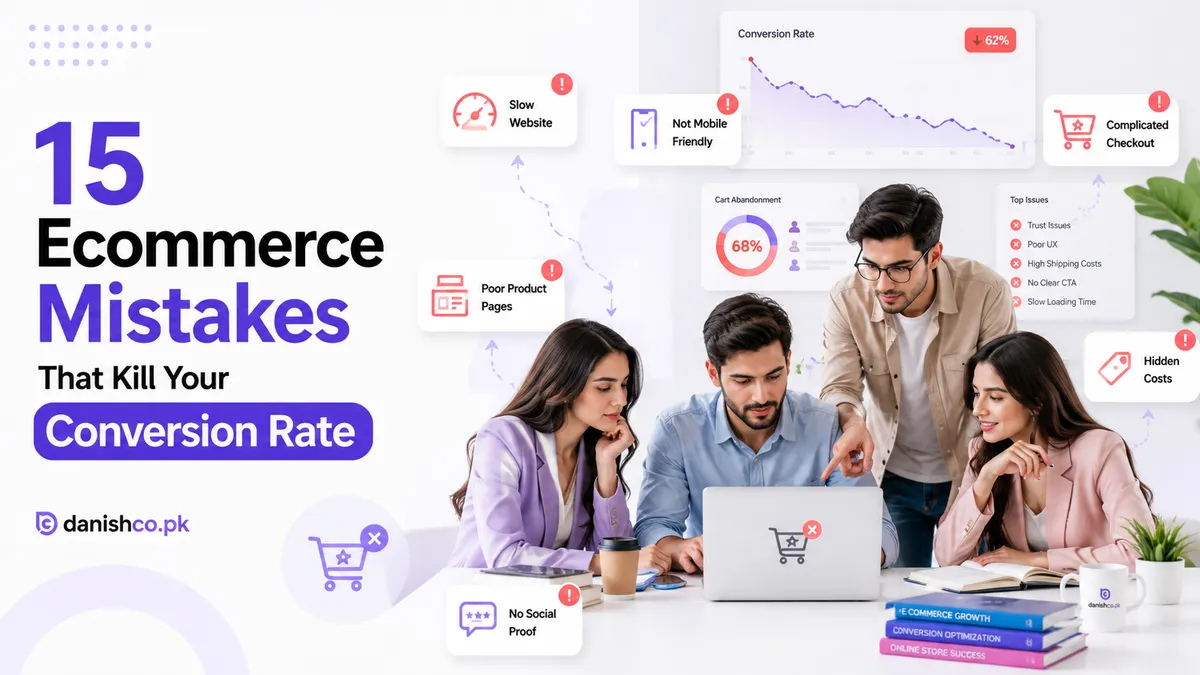
Small mistakes can have a huge impact on your online sales. Learn the top ecommerce conversion killers and how to fix them.