
Loading...
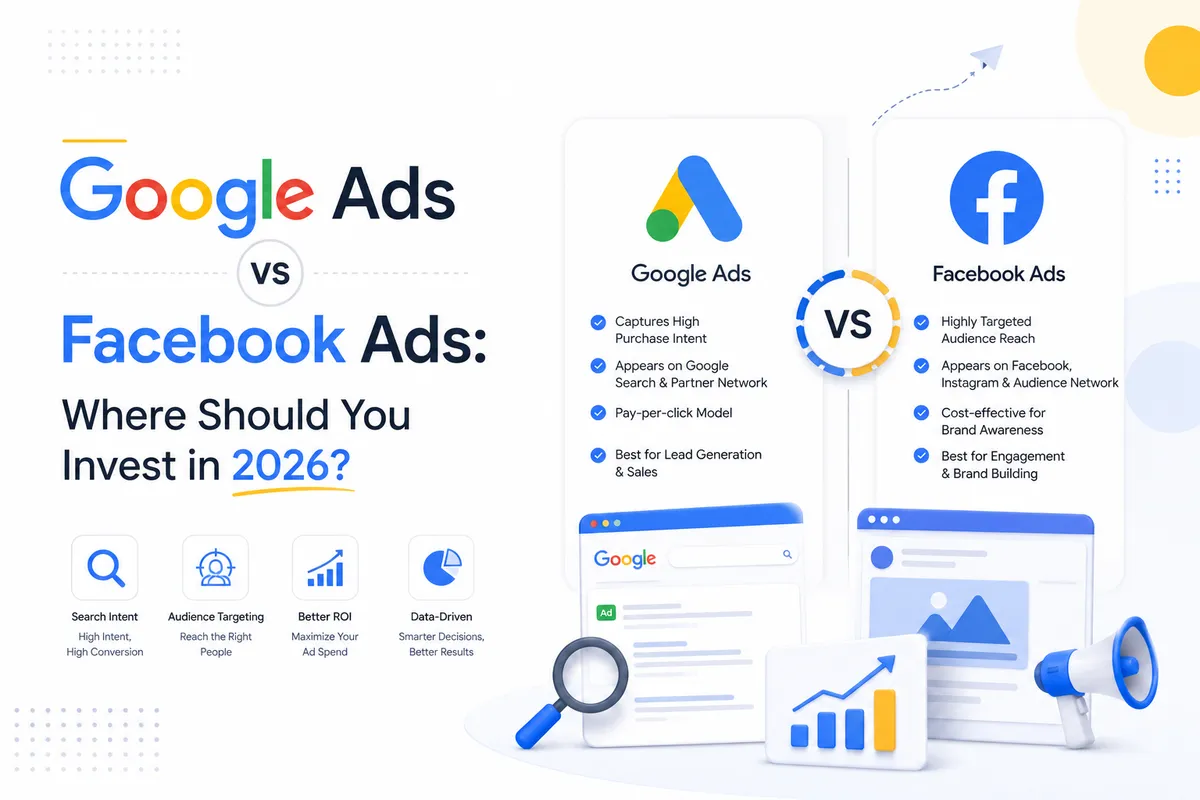
Not sure where to spend your advertising budget? Compare Google Ads and Facebook Ads to choose the right platform for your business.
Understanding the core problem that needed to be solved
Businesses today face a complex advertising landscape with two dominant platforms competing for their marketing budget: Google Ads and Facebook Ads. Each platform operates on fundamentally different principles, reaches audiences in distinct ways, and delivers results that are measured by different metrics. Making the wrong choice between them can waste significant budget, while choosing correctly can accelerate business growth dramatically.
The challenge begins with understanding the fundamental difference between search intent and social discovery. Google Ads is built around capturing existing demand. When a user types a query into Google, they are actively expressing a need or interest.
They want to find a product, solve a problem, or answer a question. Google Ads places your message in front of people who are already looking for what you offer. Facebook Ads, by contrast, creates demand.
Users on Facebook are not actively searching for products or services. They are scrolling through social content, consuming entertainment, and connecting with friends and family. Facebook Ads interrupts this experience with targeted messages designed to create interest where none previously existed.
These are two entirely different advertising philosophies, and businesses that fail to understand this distinction often apply the wrong strategy to the wrong platform. The second major challenge is budget allocation. With limited marketing budgets, businesses must decide how to split their spend between platforms that operate on completely different cost structures.
Google Ads typically costs more per click in competitive industries because you are bidding against other businesses for high-intent traffic. Facebook Ads generally offers lower cost per click but may produce lower conversion rates because the audience is not actively searching. Comparing performance across platforms using the same metrics leads to flawed decisions.
A Google Ads campaign with a higher cost per lead may actually be more valuable than a Facebook campaign with a lower cost per lead if the Google leads convert at a higher rate and have higher lifetime value. The third challenge is attribution complexity. Most businesses use last-click attribution models that give all credit to the final touchpoint before conversion.
Pro Tip
This model systematically undervalues Facebook Ads because Facebook typically operates at the top of the funnel, building awareness and consideration, while Google captures the final search click. A customer might see a Facebook ad, visit the website, leave, search for the brand on Google a week later, click a Google ad, and make a purchase. Last-click attribution gives 100% credit to Google Ads while ignoring the Facebook ad that created initial awareness.
This leads businesses to shift budget away from Facebook toward Google, even when Facebook was essential to the conversion path. The fourth challenge is ad fatigue and audience saturation. Facebook users see a larger volume of ads than Google searchers because Facebook's business model depends on advertising revenue.
This means audiences on Facebook become fatigued with ads more quickly. Creative that performs well in week one may see significantly worse performance by week three as the same audience has seen the ad multiple times. Google Ads experiences less fatigue because ads are shown primarily to users actively searching, but competition for high-value keywords continues to intensify, driving up costs.
The fifth challenge is rising cost per click across both platforms. As more businesses invest in digital advertising, the cost of reaching audiences increases. Google Ads costs in competitive industries have risen significantly year over year as more businesses compete for the same high-intent keywords.
Facebook Ads costs have also increased as the platform matures and competition for user attention intensifies. Businesses that achieved strong returns in previous years may find their results declining without changes to strategy or platform mix. The sixth challenge is platform algorithm changes.
Both Google and Facebook frequently update their advertising algorithms, sometimes dramatically. A strategy that works today may stop working tomorrow due to a change in how Google determines Quality Score or how Facebook optimizes ad delivery. Businesses must stay informed about platform changes and adapt their strategies accordingly, which requires ongoing investment in education and testing.
Pro Tip
The seventh challenge is understanding which platform suits different business types. Not all businesses are equally suited to both platforms. A B2B company selling enterprise software may find Google Ads extremely effective for capturing high-intent searchers while finding Facebook Ads ineffective for reaching decision-makers in a social context.
A fashion brand selling visually appealing products to consumers may find the opposite pattern, with Facebook Ads driving strong engagement and Google Ads being too expensive for competitive keywords. Without a clear framework for matching business type to platform, businesses waste budget on the wrong channel. An eighth challenge that often goes unrecognized is creative fatigue and the need for constant content production.
Facebook Ads, in particular, requires fresh creative assets at a much higher frequency than Google Ads because users scroll past ads quickly and become desensitized to repetitive visuals. Businesses that cannot produce enough high-quality images, videos, and ad copy variations see their Facebook performance degrade rapidly. Google Ads is more forgiving of repetitive text ads but requires constant keyword refinement and negative keyword management to maintain efficiency.
A ninth challenge is the complexity of audience targeting options on each platform. Google Ads offers targeting based on keywords, demographics, audiences, topics, and placements, while Facebook Ads offers targeting based on interests, behaviors, connections, demographics, and custom audiences. Each platform's targeting capabilities are powerful but require different skill sets to use effectively.
Businesses that try to apply Google-style targeting logic to Facebook, or vice versa, achieve poor results and draw incorrect conclusions about platform effectiveness. A tenth challenge is the lack of unified reporting across platforms. Without a centralized reporting system that aggregates data from both Google Ads and Facebook Ads into a single view, businesses struggle to compare performance accurately.
Different platforms use different attribution windows, different conversion definitions, and different reporting methodologies. Reconciling these differences requires technical expertise that many small and medium businesses lack, leading to incomplete or misleading performance comparisons. An eleventh challenge is the difficulty of testing and experimentation across platforms.
Pro Tip
Unlike a controlled laboratory environment, the real advertising landscape does not allow businesses to run identical experiments on both platforms simultaneously. Different audience compositions, platform algorithms, time of day patterns, and competitive dynamics mean that direct A/B comparisons between Google Ads and Facebook Ads are inherently flawed. Businesses that try to declare a winner based on a single test period often draw incorrect conclusions.
The twelfth challenge is ad blocking and ad blindness. An increasing number of users employ ad blockers that prevent ads from displaying on both platforms. Even among users who do not use ad blockers, many have developed banner blindness that causes them to unconsciously ignore advertising content in familiar placements.
This means that the effective reach of both platforms is lower than the reported impression numbers suggest, complicating budget planning and performance expectations.
The strategic approach we developed and implemented
The solution to the Google Ads versus Facebook Ads dilemma is not to choose one platform exclusively but to understand when and how to use each platform strategically, often in combination. The optimal approach depends on your business model, target audience, sales cycle, and specific marketing objectives. The first step is understanding which platform fits your business type.
Google Ads is the superior choice for businesses that serve customers with high purchase intent and clear search behavior. This includes B2B companies, professional services, local businesses seeking nearby customers, ecommerce stores with specific products, and any business where customers actively search for solutions. Google Ads works best when your target customer knows what they want and uses search to find it.
Facebook Ads excels for businesses that need to create demand for visually appealing products, build brand awareness, reach new audiences who are not actively searching, retarget website visitors, and generate interest in new or emerging categories. It is particularly effective for consumer brands, lifestyle products, local businesses targeting geographic areas, and businesses with strong visual content. The second step is implementing a budget split framework.
For businesses with limited budgets, a recommended starting point is to allocate 70% of your paid media budget to the platform that best matches your primary business model and 30% to the other platform for testing and retargeting. As you gather performance data over 60 to 90 days, adjust the split based on actual return on ad spend and cost per qualified lead rather than vanity metrics like cost per click or impressions. It is critical to measure the right metrics for each platform.
For Google Ads, focus on cost per conversion, conversion rate, Quality Score, impression share, and search impression share. For Facebook Ads, focus on cost per click, click-through rate, frequency, relevance score, and cost per thousand impressions. Never compare platforms on the same metric alone without accounting for funnel position and attribution.
Best Practice
The third step is implementing cross-platform attribution. Move beyond last-click attribution to a model that gives credit to multiple touchpoints in the customer journey. Google Analytics 4 provides data-driven attribution models that can help you understand how each platform contributes to conversions.
Use Facebook's conversion API alongside Google Ads conversion tracking to capture the full picture. Create platform-specific landing pages with unique tracking parameters so you can trace each lead back to its source accurately. Implement call tracking for phone call conversions to ensure calls are attributed to the correct platform.
The fourth step is developing a combined strategy that leverages both platforms' strengths. An effective approach uses Facebook Ads for top-of-funnel awareness and retargeting while using Google Ads for bottom-of-funnel conversion capture. The sequence works like this: Facebook Ads targets cold audiences with compelling visual content and introduces your brand.
The Facebook Ads pixel tracks who has visited your website. Google Ads then targets these website visitors with search ads when they search for related terms. Facebook retargeting shows ads to people who visited specific product pages but did not purchase.
Google Ads captures branded search traffic from people who remember your brand from Facebook ads. This combined approach produces better results than either platform operating independently because it addresses customers at every stage of the journey. The fifth step is continuous testing and optimization.
Run structured experiments comparing platform performance for your specific business. Test different audience segments on Facebook to find your highest-converting groups. Test different keyword match types on Google to find the most cost-effective traffic.
Measure full-funnel performance, not just last-click conversions. Adjust budget allocation based on data rather than assumptions. Reallocate budget from underperforming campaigns to those delivering the best return.
The key is to maintain flexibility and avoid becoming locked into a platform choice that no longer serves your business. As your business grows and your audience evolves, the optimal platform mix may change. A monthly review of platform performance, cost trends, and conversion data ensures your advertising budget is always allocated to the channels that deliver the best results for your specific business objectives.
Key Takeaway
The sixth step is establishing a creative production pipeline that can support the demands of each platform. For Facebook Ads, this means developing a systematic process for producing multiple creative variations, testing them rapidly, and refreshing them before fatigue sets in. Create a content calendar that schedules creative refreshes every two to three weeks.
Use dynamic creative tools that automatically test different combinations of images, headlines, and calls to action. For Google Ads, focus on building a comprehensive keyword structure with regular negative keyword updates and ad copy testing. The seventh step is implementing unified cross-platform reporting.
Set up a centralized reporting dashboard that aggregates data from both platforms into a single view with consistent metrics and attribution rules. Use Google Analytics 4 or a dedicated reporting tool to create custom reports that compare platform performance on an apples-to-apples basis. Establish standard reporting cadences and metrics definitions that your team uses consistently.
This unified view eliminates confusion about which platform is truly performing better and enables data-driven budget allocation decisions. The eighth step is investing in platform-specific expertise. The skills required to manage Google Ads effectively are different from those needed for Facebook Ads.
Consider whether your current team has the right expertise for each platform or whether you need to invest in training, hiring, or partnering with specialists. For businesses with significant advertising budgets, having dedicated specialists for each platform often produces better returns than having generalists manage both platforms. For smaller budgets, focus on mastering one platform before expanding to the other.
The key is to recognize that each platform requires dedicated attention and expertise, and that treating them as interchangeable channels will lead to suboptimal results on both. A ninth step is developing a testing framework that accounts for platform differences. Rather than trying to run identical campaigns on both platforms, design platform-specific experiments that test the unique strengths of each channel.
Key Takeaway
For example, test different audience targeting strategies on Facebook while testing different keyword match types on Google. Use incrementality testing to measure the true lift each platform provides beyond what would have happened organically. Implement holdout groups that allow you to compare the behavior of audiences exposed to your ads against those who were not, giving you a clearer picture of each platform genuine contribution to business results.
The tenth step is building an ad-blocker and ad-blindness mitigation strategy. Diversify your ad formats to include native advertising, sponsored content, and influencer partnerships that integrate more naturally into the user experience. Use first-party data for targeting to increase relevance and reduce the likelihood of being perceived as intrusive.
Invest in retargeting campaigns that reach users who have already demonstrated interest in your offerings, as these users are less likely to ignore your messaging. Focus on creating ad creative that is genuinely useful, entertaining, or informative, earning attention rather than demanding it.
Pro Tip
Measurable outcomes and business impact achieved
Developed platform selection framework based on business model and audience
Created cross-platform attribution model for accurate performance measurement
Built combined funnel strategy using both Google and Facebook Ads
Established creative production pipeline for sustained ad performance
Best Practice
Tools, platforms, and technologies powering the solution
Expert Recommendation
The most important lessons from this project
Key Takeaway
Common questions about our approach and methodology
The timeline depends on the scope of work. Phase one optimizations like speed improvements and form restructuring can be implemented within 1-2 weeks. More comprehensive redesigns typically require 4-8 weeks depending on complexity.
Not necessarily. Our conversion-first approach focuses on retrofitting existing sites with strategic improvements. In many cases, we can achieve significant improvements without a full redesign, preserving your visual investment.
We tie every optimization to specific, measurable business metrics. Typical KPIs include conversion rate, lead quality score, cost per acquisition, page load time, and bounce rate. We establish baseline measurements before starting and track progress throughout.
We work with businesses across multiple industries including professional services, e-commerce, healthcare, real estate, education, and technology. Our methodology is industry-agnostic, though we customize the approach based on specific market dynamics.
Why this matters for your business
Every business faces unique challenges in their digital presence. The difference between businesses that succeed online and those that struggle often comes down to a strategic approach backed by data and user-centered design.
Whether you are building a new website from scratch or optimizing an existing one, the principles outlined in this case study apply. Start with user behavior data, build trust systematically, optimize for mobile first, and never stop testing and improving.
Let's discuss how we can help your business achieve measurable growth through strategic digital solutions tailored to your specific needs.
Get Your Free Consultation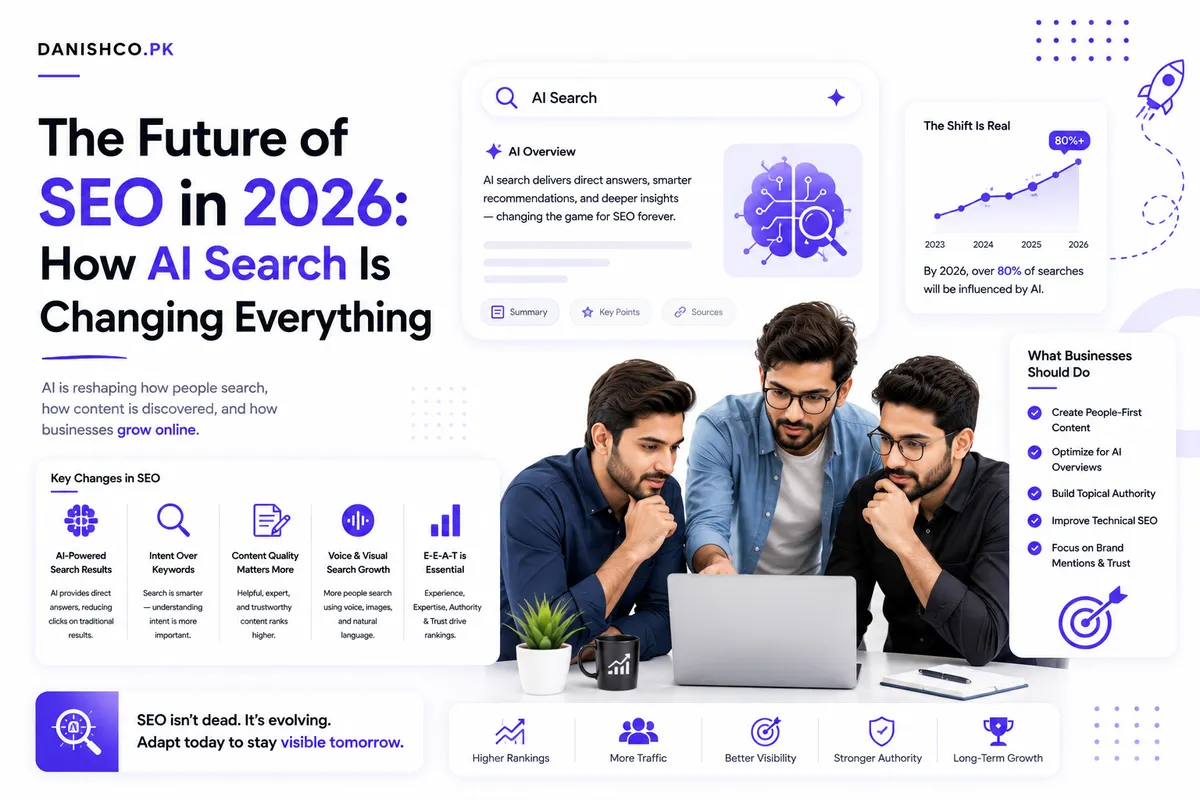 Marketing
Search is evolving faster than ever. Discover how AI Search, Google AI Overviews, ChatGPT and conversational search are transforming SEO in 2026—and what businesses must do to stay visible.
 Marketing
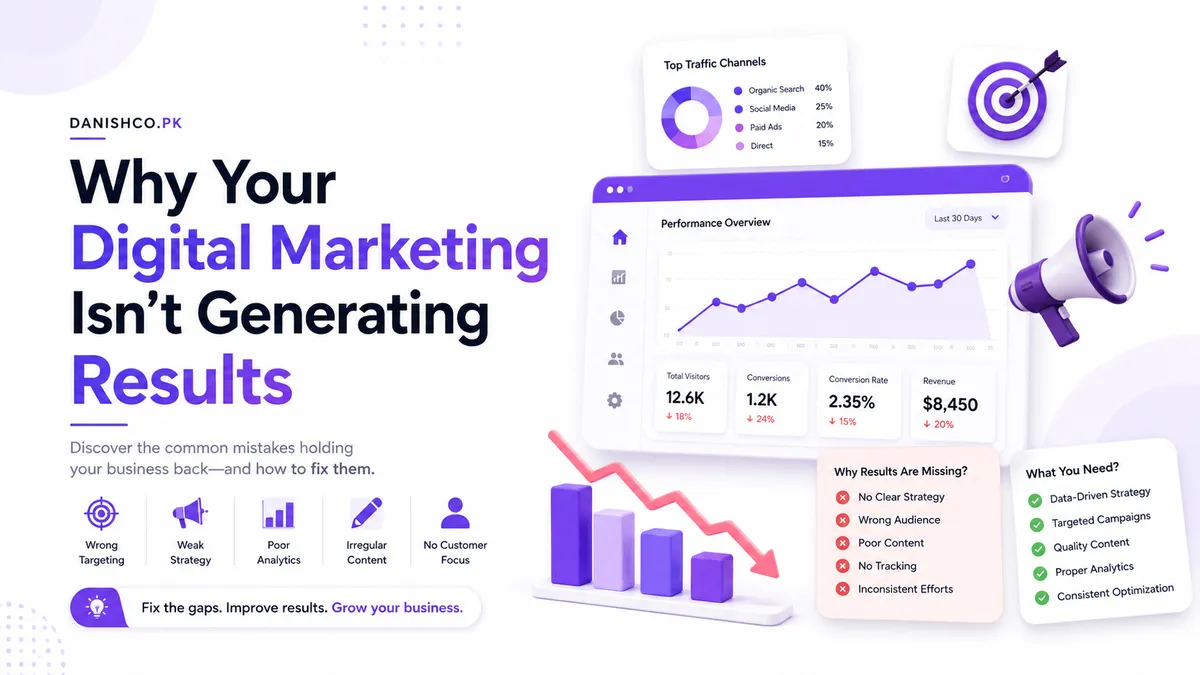
Spending money on marketing but getting little or no return? Discover the biggest reasons campaigns fail and how to fix them.