
Loading...
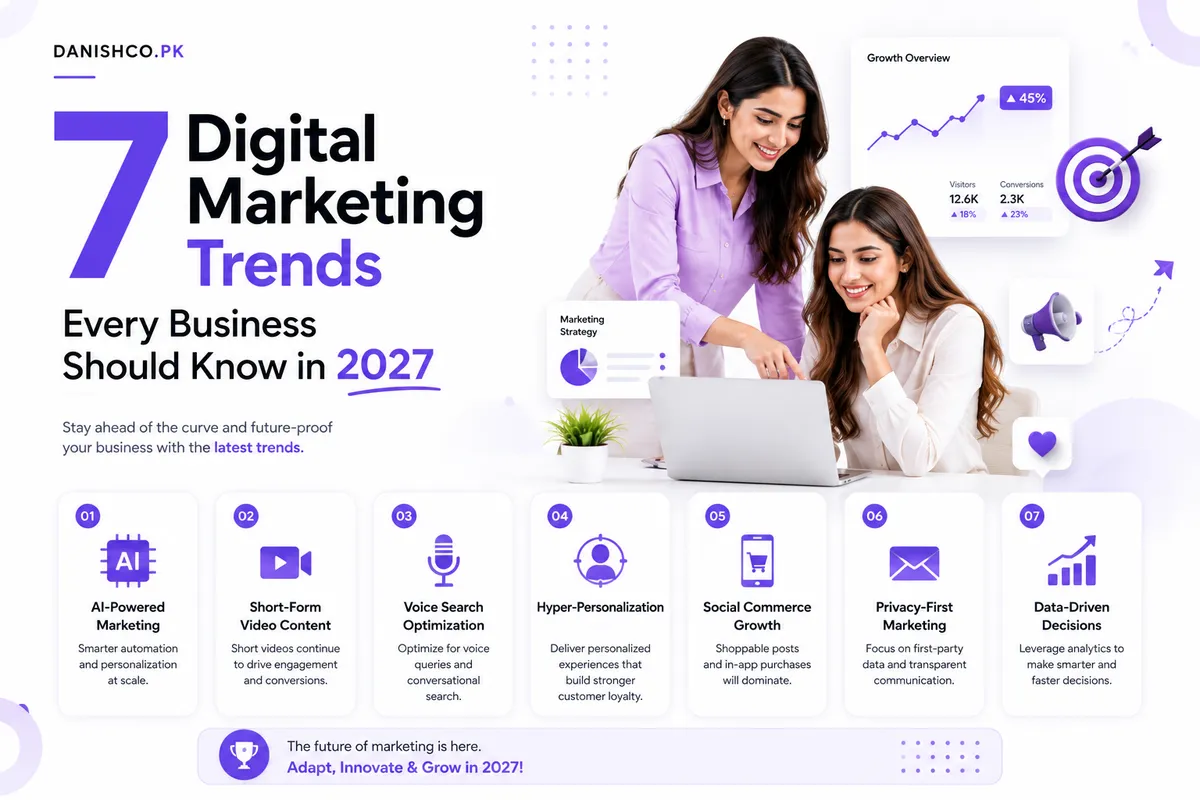
Stay ahead of your competitors by understanding the biggest digital marketing trends shaping business growth in 2027.
Understanding the core problem that needed to be solved
The digital marketing landscape is evolving at an unprecedented pace, driven by advances in artificial intelligence, shifting consumer expectations, and regulatory changes that are reshaping how businesses can reach and engage their audiences. For business owners and marketers, keeping up with these changes is not just about staying competitive but about survival. Those who fail to adapt will find their marketing becoming less effective, more expensive, and increasingly irrelevant to the audiences they need to reach.
The first major trend reshaping marketing is artificial intelligence becoming a standard tool rather than an experimental technology. By 2027, AI is embedded in virtually every marketing function. AI tools generate content, optimize ad targeting, personalize email campaigns, analyze customer data, predict customer behavior, and automate routine marketing tasks.
The challenge for businesses is that AI adoption creates a two-tier market: companies that leverage AI effectively gain significant competitive advantages in speed, efficiency, and personalization, while companies that ignore AI fall further behind. The gap between AI adopters and non-adopters widens rapidly as AI capabilities improve. The second trend is the shift toward privacy-first advertising.
The gradual elimination of third-party cookies, combined with increasing privacy regulations and consumer awareness, has fundamentally changed how businesses can track and target customers. Apple's App Tracking Transparency framework, Google's Privacy Sandbox initiative, and regulations like GDPR and CPRA have made it significantly harder to track users across the web. Businesses that relied on third-party data for targeting, retargeting, and measurement must now rebuild their approach around first-party data, contextual targeting, and privacy-compliant solutions.
This transition is challenging because it requires new technology stacks, new data collection strategies, and new ways of measuring marketing effectiveness. The third trend is the growth of voice and visual search. Voice assistants like Alexa, Siri, and Google Assistant handle an increasing share of search queries, and visual search tools like Google Lens allow users to search using images rather than text.
Key Takeaway
These alternative search modalities change how content needs to be optimized. Voice searches tend to be longer, more conversational, and phrased as questions rather than keywords. Visual search requires high-quality images with proper metadata and structured data markup.
Businesses that optimize for these emerging search methods capture traffic that competitors focusing only on traditional text-based SEO miss entirely. The fourth trend is hyper-personalization becoming a customer expectation rather than a differentiator. Consumers in 2027 expect brands to understand their preferences, anticipate their needs, and deliver tailored experiences across every touchpoint.
Generic mass-marketing campaigns increasingly feel irrelevant and annoying to consumers who are accustomed to personalized recommendations from platforms like Netflix, Amazon, and Spotify. The challenge is that delivering true hyper-personalization at scale requires sophisticated data infrastructure, AI-powered analytics, and integrated marketing technology stacks that many businesses have not yet built. The fifth trend is community-driven brand building.
Trust in traditional advertising continues to decline, with consumers placing greater weight on recommendations from peers, online communities, and content creators they trust. Brands that build genuine communities around their products create powerful competitive moats that are difficult for competitors to replicate. However, building a community requires a fundamentally different approach than broadcast marketing.
It requires consistent engagement, authentic communication, genuine value creation, and a long-term perspective that conflicts with the short-term ROI focus of many marketing organizations. The sixth trend is the dominance of video-first content strategy. Video continues to capture increasing shares of consumer attention and digital advertising spend.
Short-form video platforms like TikTok, Instagram Reels, and YouTube Shorts have trained consumers to expect engaging, concise, visually rich content. Businesses that rely primarily on text and static images find it increasingly difficult to capture attention and communicate their value proposition effectively. The challenge is that producing high-quality video content at scale requires different skills, tools, and production workflows than text-based content creation.
Key Takeaway
The seventh trend is the growing demand for sustainable and purpose-driven marketing. Consumers, particularly younger demographics, increasingly make purchasing decisions based on a brand's environmental and social impact. Businesses that communicate authentic sustainability commitments and demonstrate genuine purpose attract loyal customers willing to pay premium prices.
However, purpose-washing or making sustainability claims without substance carries significant reputational risk. Consumers and regulators are increasingly scrutinizing sustainability claims, and businesses must back their marketing messages with verifiable actions and transparent reporting. Beyond these seven major trends, businesses must also contend with the fragmentation of digital platforms and the increasing difficulty of reaching audiences across a growing number of channels and devices.
The average consumer now interacts with brands across six to eight different touchpoints before making a purchase decision, and each touchpoint must deliver a consistent brand experience. Managing this complexity while staying current with rapid technological change is one of the biggest challenges facing marketing leaders today. Another underlying challenge is the growing skills gap in marketing teams.
The marketing skills that were valuable five years ago are no longer sufficient in an AI-driven, privacy-first, video-dominated landscape. Businesses struggle to find and retain talent with the right combination of technical, creative, and strategic skills. Investing in team development and training has become a competitive necessity rather than an optional expense.
An eighth challenge that businesses must navigate is the fragmentation of marketing technology. The number of available marketing tools has exploded, with thousands of platforms offering specialized solutions for every aspect of marketing. While this abundance provides more options than ever before, it also creates integration challenges, data silos, and decision paralysis.
Businesses struggle to build coherent marketing technology stacks where tools work together seamlessly rather than creating disconnected systems that require manual data transfer and reconciliation. The ninth challenge is the increasing cost of customer acquisition across all channels. As competition for consumer attention intensifies and privacy regulations limit targeting capabilities, the cost of acquiring a new customer continues to rise across most industries and channels.
Key Takeaway
Businesses must become more efficient in their acquisition spending while simultaneously investing in customer retention and lifetime value optimization to maintain sustainable growth in the face of rising acquisition costs. The tenth challenge is measuring return on investment in an increasingly complex marketing landscape. With multiple channels, touchpoints, and attribution models, determining which marketing activities are actually driving revenue has become more difficult than ever.
Businesses risk making budget allocation decisions based on incomplete or misleading data, investing in channels that appear to perform well but are actually taking credit for conversions driven by other touchpoints in the customer journey.
The strategic approach we developed and implemented
Navigating the seven marketing trends of 2027 requires a structured approach that transforms each challenge into a strategic opportunity. Rather than trying to address all seven trends simultaneously, businesses should prioritize based on their specific industry, audience, and current marketing maturity. The first priority for most businesses is AI integration into their existing marketing stack.
Start by identifying the most repetitive, time-consuming marketing tasks in your organization and research AI tools that can automate or augment those specific functions. For content marketing, tools like generative AI platforms can help with drafting blog posts, social media content, email copy, and ad creative, but human oversight remains essential for quality control, brand voice consistency, and strategic direction. For advertising, AI-powered bid management and audience targeting tools can optimize campaign performance beyond what human managers can achieve manually.
For analytics, AI tools can surface patterns and insights from marketing data that would take humans weeks to discover. The key is to implement AI as a force multiplier for your marketing team, not as a replacement for human creativity and strategic thinking. The second priority is building a first-party data strategy.
With third-party cookies disappearing, businesses must collect their own customer data through direct relationships. Implement strategies to capture first-party data at every customer touchpoint: website registrations, newsletter signups, purchase data, customer surveys, loyalty programs, and preference centers. Use this data to build detailed customer profiles that enable personalization without relying on third-party sources.
Implement server-side tracking and conversion APIs to maintain measurement capabilities as browser restrictions tighten. Invest in a customer data platform that centralizes first-party data from multiple sources and makes it accessible to your marketing tools. The third priority is adapting your SEO strategy for voice and visual search.
Optimize for conversational long-tail keywords that match how people speak rather than how they type. Create FAQ content that directly answers common questions in natural language. Implement structured data markup to help search engines understand your content and serve it in rich results.
Pro Tip
Optimize images with descriptive filenames, alt text, and schema markup for visual search compatibility. Create video content with transcripts and structured data to capture video search traffic. The goal is to ensure your content is discoverable across all search modalities, not just traditional text search.
The fourth priority is implementing hyper-personalization through marketing automation. Use your first-party data to segment audiences based on behavior, preferences, purchase history, and engagement patterns. Create automated email sequences that deliver personalized content based on where each prospect is in their customer journey.
Dynamically personalize website content based on visitor segments using tools that swap headlines, images, and offers based on visitor characteristics. Personalize ad creative and messaging for different audience segments rather than running one-size-fits-all campaigns. The fifth priority is building brand community through consistent engagement.
Identify the platforms where your most engaged customers already spend time and establish a presence there. Create exclusive content, discussions, and experiences for community members. Encourage user-generated content that builds social proof and community identity.
Appoint community managers who can engage authentically with members, answer questions, and foster connections between members. Measure community health through engagement metrics, member retention, and community-driven referrals rather than direct sales attribution. The sixth priority is transitioning to a video-first content strategy.
Start by repurposing existing high-performing written content into video formats. Create a content calendar that balances short-form video for social platforms with longer-form video for your website and YouTube channel. Invest in basic video production equipment and training for your team.
Develop a consistent visual style and brand presence across video content. Use video analytics to understand what resonates with your audience and double down on successful formats. The seventh priority is integrating sustainability and purpose into your marketing authentically.
Identify the environmental or social causes that genuinely align with your business values and operations. Make specific, measurable commitments rather than vague aspirational statements. Communicate your progress transparently, including setbacks and challenges.
Best Practice
Back your marketing claims with third-party certifications, published reports, and verifiable data. Engage your community in your sustainability initiatives to build genuine connection and shared purpose around your brand mission. In addition to addressing these seven trends, businesses must invest in their marketing team's skills and capabilities.
Create a continuous learning culture where team members are encouraged and supported in developing new skills. Provide access to training resources, industry conferences, and certification programs. Cross-train team members across different marketing disciplines to build flexibility and resilience.
The businesses that invest in their people alongside their technology will be best positioned to navigate the rapidly evolving marketing landscape of 2027 and beyond. An eighth implementation priority is building a marketing technology stack that is integrated and coherent. Audit your current marketing technology tools and identify integration gaps, redundant tools, and data silos.
Prioritize platforms that offer native integrations with your core systems. Invest in a marketing data platform or customer data platform that centralizes data from multiple sources. Reduce tool fragmentation by consolidating where possible, choosing comprehensive platforms that serve multiple functions rather than specialized point solutions for every individual need.
The ninth priority is implementing customer acquisition cost optimization and lifetime value measurement. Track customer acquisition cost by channel, campaign, and customer segment. Identify your most efficient acquisition channels and allocate additional budget to them.
Implement customer lifetime value tracking that measures the total revenue generated by each customer over their relationship with your business. Use lifetime value data to inform acquisition spending decisions, investing more to acquire customers with high predicted lifetime value even if initial acquisition costs are higher. The tenth priority is building robust marketing measurement and attribution systems.
Implement multi-touch attribution models that give appropriate credit to each marketing touchpoint in the customer journey. Use incrementality testing to measure the true impact of your marketing activities. Build dashboards that provide clear visibility into marketing performance across all channels, campaigns, and customer segments.
Regularly audit your measurement systems to ensure they are capturing data accurately and providing actionable insights rather than misleading reports.
Pro Tip
Measurable outcomes and business impact achieved
AI integration roadmap developed for marketing technology stack
First-party data strategy implemented for privacy-compliant marketing
Voice and visual search optimization framework established
Sustainability messaging aligned with verifiable brand actions
Best Practice
Tools, platforms, and technologies powering the solution
Expert Recommendation
The most important lessons from this project
Key Takeaway
Common questions about our approach and methodology
The timeline depends on the scope of work. Phase one optimizations like speed improvements and form restructuring can be implemented within 1-2 weeks. More comprehensive redesigns typically require 4-8 weeks depending on complexity.
Not necessarily. Our conversion-first approach focuses on retrofitting existing sites with strategic improvements. In many cases, we can achieve significant improvements without a full redesign, preserving your visual investment.
We tie every optimization to specific, measurable business metrics. Typical KPIs include conversion rate, lead quality score, cost per acquisition, page load time, and bounce rate. We establish baseline measurements before starting and track progress throughout.
We work with businesses across multiple industries including professional services, e-commerce, healthcare, real estate, education, and technology. Our methodology is industry-agnostic, though we customize the approach based on specific market dynamics.
Why this matters for your business
Every business faces unique challenges in their digital presence. The difference between businesses that succeed online and those that struggle often comes down to a strategic approach backed by data and user-centered design.
Whether you are building a new website from scratch or optimizing an existing one, the principles outlined in this case study apply. Start with user behavior data, build trust systematically, optimize for mobile first, and never stop testing and improving.
Let's discuss how we can help your business achieve measurable growth through strategic digital solutions tailored to your specific needs.
Get Your Free Consultation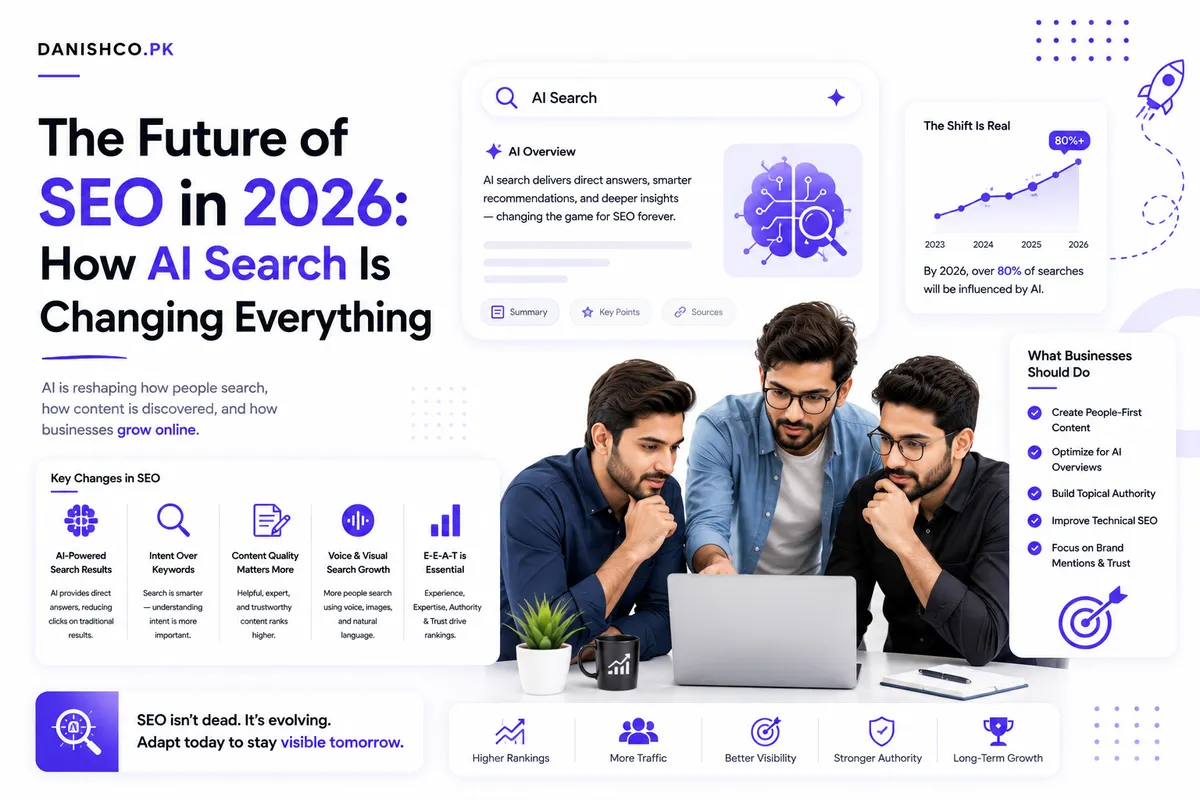 Marketing
Search is evolving faster than ever. Discover how AI Search, Google AI Overviews, ChatGPT and conversational search are transforming SEO in 2026—and what businesses must do to stay visible.
 Marketing
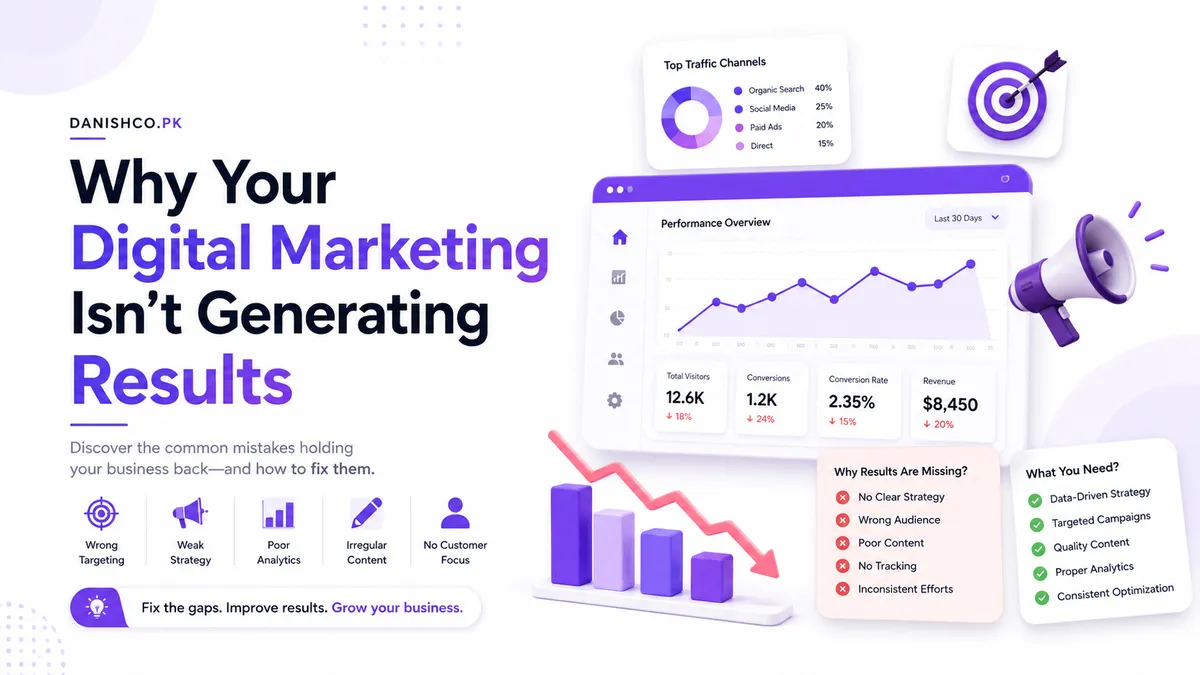
Spending money on marketing but getting little or no return? Discover the biggest reasons campaigns fail and how to fix them.